Thailand travel experience
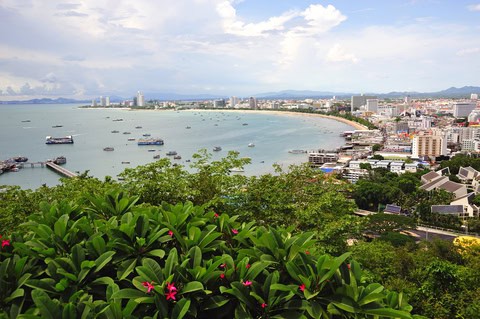
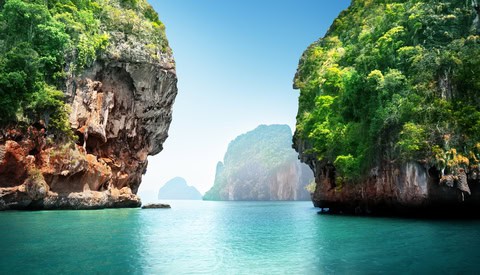
There is a reason they call it the “Land of Smiles.” Before visiting Thailand, I assumed it was just a marketing slogan. After spending three weeks traversing from the chaotic energy of Bangkok to the tranquil beaches of Koh Lanta, I can assure you—it is a genuine, palpable energy that greets you the moment you step off the plane.
I landed at Suvarnabhumi Airport with a backpack full of expectations and a itinerary that was, frankly, too ambitious. I was immediately hit by a wave of humid air and the scent of lemongrass and exhaust fumes. It was sensory overload in the best way possible. Whether you are a solo backpacker looking for adventure, a group of friends ready to party, or a family seeking culture and beaches, Thailand will meet your needs perfectly.
Visiting Thailand for the first time
If you are coming from a quiet suburban town, Bangkok will hit you like a truck. The traffic is a symphony of honking horns, tuk-tuk engines, and the constant “sizzle” from street-side woks. My first instinct was to retreat into my hotel and watch it from the window. Don’t. The chaos is the attraction.
Within an hour of checking in, I ventured out. I quickly learned that the sidewalk is a shared ecosystem: you have food vendors, people selling knock-off jerseys, monks collecting alms, and stray dogs sleeping in the shade—all coexisting. You have to walk with a certain flow; hesitating makes you a target for every tuk-tuk driver offering a “cheap price, special for you!”

Interacting with locals
The general interaction with locals was, without exception, the highlight of my trip. There is a deep-seated cultural value here called sanuk, which means finding joy in your work and life.
I remember getting hopelessly lost in the alleys of Chiang Mai’s Old City. A woman selling mangoes saw the confusion on my face. Despite speaking zero English, she gestured for me to wait, called her teenage grandson on the phone, and handed the phone to me so he could translate directions. She refused any money for the mango she forced into my hand as I left. These moments happen constantly.
Useful Tip: Always smile and offer a slight bow with your hands pressed together in a prayer-like gesture. This is called the Wai. It shows respect. Locals appreciate the effort immensely.
Eating street food in Thailand
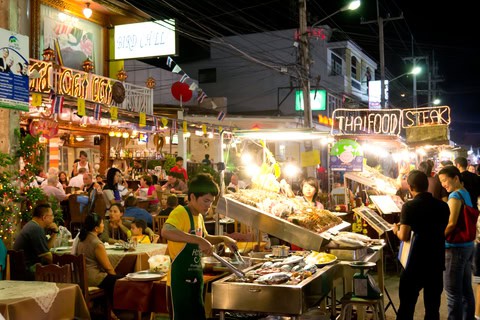
Eating out in Thailand ranges from a 50-cent street snack to a five-star dining experience.
I was hesitant about street food at first. The hygiene standards in some stalls gives food for thought But I learned the golden rule: eat where the locals eat. If a stall has a crowd of Thai workers eating there at 1 PM, the food is safe and delicious.
My Experience: I sat on a tiny plastic stool on a sidewalk in Chinatown (Yaowarat Road) at 10 PM. The place was lit by a single fluorescent bulb. I ordered Kuay Teow Reua (boat noodles) and a plate of Pad See Ew. It cost me less than $3 USD. It was, hands down, the best meal of my entire trip. The sweetness of the soy sauce, the wok hei (breath of the wok)—unreal.
For families, most restaurants are used to catering to kids and have mild versions of classics like chicken cashew nut stir-fry. For groups of friends, the “family style” sharing culture here is perfect; you order 4-5 dishes for the table and share everything.
Getting Around
Getting around Thailand is an adventure in itself, and your method of transport will drastically shape your experience.
In Bangkok, ignore the taxis during rush hour. You will sit still for an hour watching motorbikes whiz by. Instead, embrace the BTS Skytop (Skytrain) and the MRT (subway). They are air-conditioned, cheap, and efficient. However, to really feel like a local, you must take a tuk-tuk once—but agree on the price before you get in. For island hopping, the ferries are reliable, but the “speedboats” offered by tours are faster but can be a bumpy ride; if you get seasick, stick to the larger ferries.
- Transportation Tip – For solo travelers, the local bus system in places like Chiang Mai is confusing, so I recommend using the Grab app (Southeast Asia’s Uber) or renting a motorbike—just ensure you have an International Driver’s Permit, or the police will fine you (another experience I had personally!).

Thailand family travel tips
- Negotiate with a Smile: Bargaining is expected at markets like Chatuchak or Patpong. But do it respectfully. If the vendor says 500 Baht, you can counter with 300. If they refuse and you walk away, and they call you back, you’ve reached a fair price. If they don’t call you back, that was the real price.
- Respect the Monarchy and Religion: Never point your feet at a Buddha image. When sitting in a temple, tuck your feet behind you. It is illegal to disrespect the King or religion, and locals hold this very close to their hearts.
- Hydration is Key: Buy a large water bottle and refill it at your hotel. The heat will dehydrate you faster than you think, especially when moving between cities.
Things to Know
Languages Spoken
While Thai is the official language, English is widely spoken in tourist hubs, hotels, and by younger generations. However, once you leave the main cities, English proficiency drops. Learning a few phrases is not just polite; it’s a survival skill.
Here are 5 short phrases that will change how locals treat you:
1. Sawasdee (khrap/ka) – Hello.
· Men say “khrap” (like ‘cup’ with a sharp tone), women say “ka” (with a long tone). It’s the universal greeting.
2. Khob Khun (khrap/ka) – Thank you.
· Essential for every interaction with vendors and service staff.
3. Aroi Mak Mak – Delicious, very very.
· Use this when eating. The cook’s face will light up.
4. Tao Rai? – How much?
· Useful in markets to check prices before buying.
5. Chai / Mai Chai – Yes / No.
· Simple, but vital.
Currency
The currency is the Thai Baht (THB) .
The exchange rate is roughly $1 USD = 35 THB. This makes mental math easy: just divide the Baht price by 35 (or roughly 30 for a quick estimate). A 100 Baht meal is about $3 USD.
Tip: While credit cards are accepted in malls and hotels, street food, markets, and taxis operate on cash only. Always carry small bills. Vendors often “don’t have change” for large 1,000 Baht notes, so break them at a 7-Eleven by buying a bottle of water.
Weather
Thailand is hot and humid. There is no way around it. However, there are distinct seasons.
· Cool Season (November to February): This is the “best” time. It is less humid, and temperatures are bearable (75-85°F). This is when I went. It was perfect for exploring temples without melting.
· Hot Season (March to June): Incredibly hot. Temperatures can hit 100°F+.
· Rainy Season (July to October): Short, heavy downpours usually in the afternoon. It doesn’t rain all day, but when it rains, it pours.
What I learned: Even in the “cool” season, you will sweat. Pack light, breathable fabrics. And if you visit temples, you need to cover your shoulders and knees. Bring a light scarf or pashmina; it doubles as a sun cover and a temple cover-up.