Best Time for Etosha Safari by Season
You want to see elephants at a waterhole, Lions on a salt pan or Rhinos walking right past your car. Etosha National Park in Namibia is definitely one of the best Safaris to visit. However, you may not experience these sightings throughout the year as I learned that lesson when I visited in December. On my first trip I showed up expecting the classic safari scenes, instead I got tall grass, scattered animals, and afternoon rains that turned roads to mud. I still loved it but I missed the peak period for memorable Safari experience. Since then I have visited Etosha in every season, dry, wet and Shoulder months. Each has season has its strengths and weaknesses.
Etosha can feel like two completely different parks depending on when you go. In one season, wildlife gathers tightly around waterholes and game drives become almost unbelievably productive. In another, the landscape turns greener, birdlife surges, and the park feels wilder, quieter, and more atmospheric. If you are trying to decide the best time for Etosha safari, the real answer is not just about weather – it is about what kind of safari experience you want.
Etosha National Park is one of Namibia’s great wildlife destinations, and timing shapes everything from animal visibility to road conditions to the overall mood of the trip. For some travelers, the best months are all about dramatic predator sightings and easy game viewing. For others, a softer green landscape, newborn animals, and fewer vehicles matter more. Travel deeper. Discover more. That mindset works especially well here, because Etosha rewards travelers who match the season to their priorities.
Best time for Etosha safari: the short answer
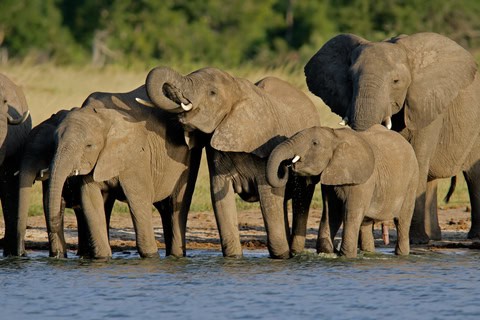
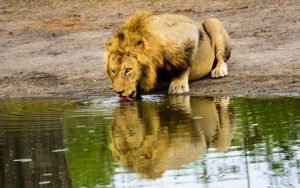
For most travelers, the best time for Etosha safari is during the dry season, from roughly June to October. This is when water becomes scarce across the park, and animals concentrate around permanent and man-made waterholes. Sightings are generally easier, especially for first-time safari travelers who want a strong chance of seeing elephants, giraffes, zebras, springbok, wildebeest, lions, and possibly rhinos in a relatively short visit.
That said, the green season from November to April has its own appeal. The park looks more alive, migratory birds arrive, photography can be beautiful, and you may find lower rates or fewer crowds depending on where you stay. The trade-off is that wildlife spreads out more widely, so game viewing can be less predictable.
If you want the simplest recommendation, aim for July through September. If you want a more nuanced answer, keep reading.
Dry season in Etosha: June to October
This is the classic safari period in Etosha, and there is a reason it is so often recommended. As the landscape dries out, natural water sources shrink and wildlife becomes easier to find around reliable waterholes. In Etosha, that matters a lot because many lodges and camps, as well as popular driving routes, are built around exactly this kind of viewing.
During these months, the bush is thinner and visibility improves. You are not staring through dense summer vegetation hoping to catch movement. Instead, you can scan open spaces and waterhole edges where animals often arrive steadily throughout the day.
Why the dry season is so popular
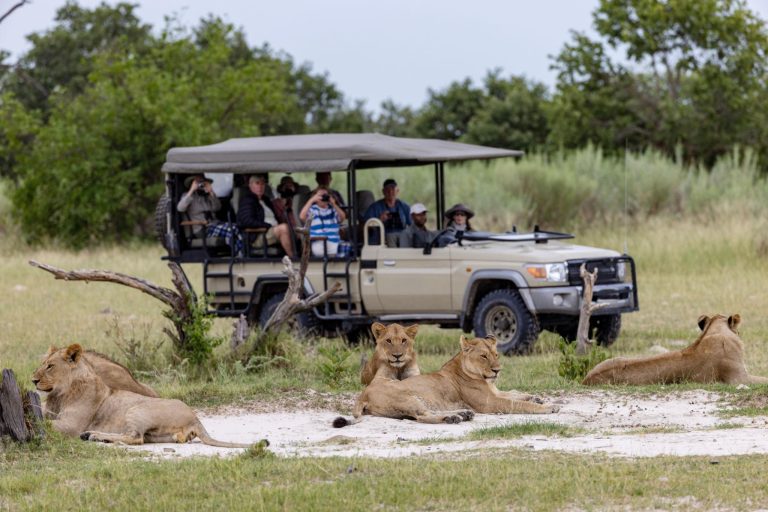
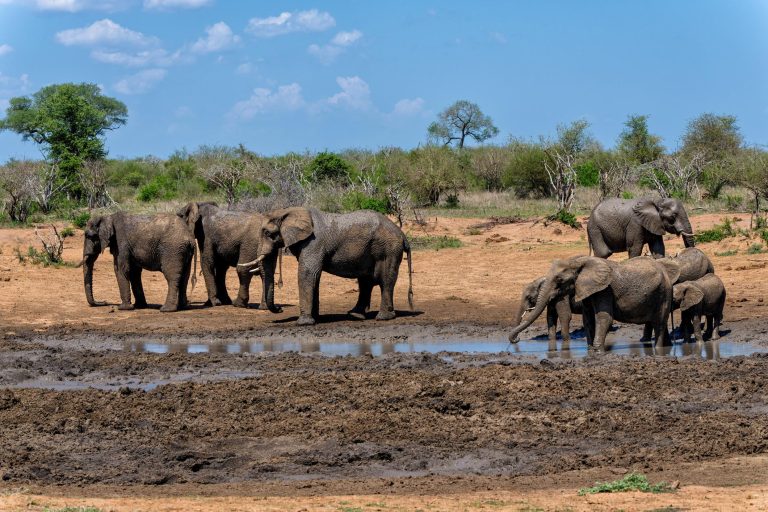
For travelers focused on pure game viewing, this is usually the strongest window. Elephants often visit waterholes in impressive numbers. Plains game is easier to spot. Predators benefit from the same concentration effect, so lion sightings can be especially rewarding. Black rhino, one of Etosha’s most sought-after sightings, is also a major draw, particularly around floodlit camp waterholes after dark.
The experience is also very practical. Roads are usually easier to manage, and self-drive visitors often find the conditions more straightforward than in the wetter months. This matters in Namibia, where many travelers combine Etosha with a broader road trip.
The trade-offs in the dry months
The best wildlife viewing season is also the most popular. That does not mean Etosha feels overrun in the way some safari parks can, but around well-known waterholes and peak holiday periods, there can be more vehicles. The scenery is also harsher. By late dry season, especially September and October, the park can feel dusty and stark.
Temperatures shift during the dry season too. June and July nights can be surprisingly cold, especially on early morning drives. By contrast, October can be extremely hot. If you love warm weather but dislike intense heat, August and September often strike a better balance.
Green season in Etosha: November to April
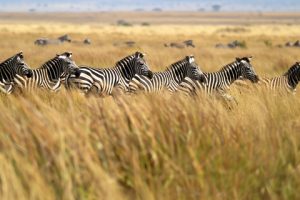
When the rains arrive, Etosha changes character. The air feels fresher, the plains begin to green, and the park takes on a softer, more varied beauty. This is not always the easiest season for first-time safari travelers who want nonstop sightings, but it can be a rewarding time for those who value atmosphere, birding, and a less conventional safari rhythm.
Rainfall is not constant all day, every day. You may get dramatic afternoon storms, overcast stretches, or bursts of sunshine between showers. The landscape responds quickly, and so does the wildlife.
What makes the green season special
This is the best period for birdwatchers. Migratory species arrive, and the park becomes far richer in birdlife than many dry-season visitors expect. If your safari interests extend beyond large mammals, this can be a real advantage.
The green season is also a good time to see young animals. Many antelope species give birth around this period, which adds another layer to the safari experience. There is a sense of renewal in the park that dry-season visitors simply do not get.
Photographers often appreciate this time as well. The backgrounds are greener, the skies can be dramatic, and the light after rain can be excellent. Etosha’s salt pan and open plains can look especially striking under changing weather conditions.
The trade-offs in the green months
The biggest drawback is that wildlife is generally less concentrated. With more water available across the park, animals do not need to gather as predictably around major waterholes. Vegetation also becomes thicker, which can make sightings trickier.
Some roads may be slower or muddier after rain, depending on exact conditions. Self-drive travelers should stay flexible and check local advice. This is also not the ideal season if your dream safari is built around highly efficient big game viewing from dawn to dusk.
Month-by-month guidance for Etosha
If you like to plan around specific months rather than broad seasons, Etosha becomes easier to read.
June and July are excellent for dry-season wildlife viewing, with cooler mornings and nights. These months suit travelers who do not mind layering up early in the day.
August and September are often considered prime months. Wildlife remains concentrated, temperatures are more comfortable than the peak heat to come, and game viewing is consistently strong.
October can produce fantastic sightings because conditions are so dry, but the heat can be intense. If you tolerate hot weather well, this can still be a very rewarding month.
November is a transition month. Early November may still feel like the dry season, while later in the month the first rains can begin to shift the landscape. This makes it a bit less predictable, but sometimes very interesting.
December through March brings the green season pattern. Expect greener scenery, birdlife, and more scattered wildlife movement. January and February can be especially attractive for travelers who value landscape and atmosphere as much as big game concentration.
April is another transition month and often an underrated one. The park may still hold some green beauty from the rains, but conditions can begin to stabilize. For some travelers, it offers a nice middle ground.
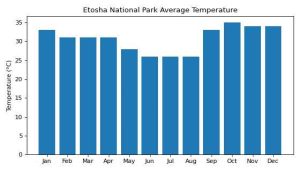
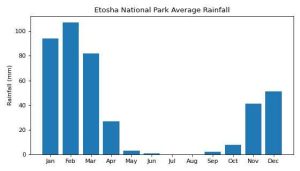
Quick Climate Pattern
- Wettest months: January to March
- Driest months: June to August
- Coolest safari season: June and July
- Hottest months: October to December
- Best wildlife viewing: May to September when water is scarce and animals gather at waterholes
Best time for Etosha safari based on your travel style
If this is your first safari in Namibia, the dry season is the safer choice. It gives you the strongest chance of frequent sightings and a clearer understanding of why Etosha is so highly regarded.
If you are a returning safari traveler and want a different feel, the green season can be deeply rewarding. It offers a more layered experience, where weather, birdlife, and landscape become part of the story rather than just the backdrop.
For photographers, the answer depends on your subject. If you want dramatic wildlife encounters at waterholes, go dry. If you want richer scenery and moody skies, consider the rains.
For families or self-drive travelers, dry-season road conditions are often simpler and game viewing can be more immediately satisfying. For birders and travelers who do not mind a little unpredictability, the green season stands out.
Weather, crowds, and budget
There is no perfect month that wins on every front. The strongest wildlife season often comes with higher demand, especially at sought-after lodges and park camps. Booking well ahead matters if you are traveling between July and October.
Shoulder periods like April, May, and November can offer an appealing compromise. You may avoid the busiest windows while still enjoying good wildlife viewing or more attractive scenery, depending on rainfall patterns.
Budget travelers sometimes find better value outside peak dry-season months, though this varies by property and route. In Namibia, timing often affects not just Etosha but your whole itinerary, especially if you are combining the park with places like Swakopmund, Sossusvlei, or Damaraland.
So when should you go?
If your priority is classic wildlife viewing and you want the easiest, most reliable safari experience, go between July and September. That is the period most travelers mean when they ask for the best time for Etosha safari.
If you are drawn to greener landscapes, birding, and a quieter, more atmospheric version of the park, the months from December to April may suit you better. The sightings may require more patience, but the experience can feel more textured and personal.
Etosha does not ask every traveler to come at the same time. It asks you to be clear about what kind of journey you want. Choose the season that matches your curiosity, not just the calendar, and the park is far more likely to meet you with exactly the kind of safari you came for.
Final thoughts on Best Time for Etosha Safari
No single month suits every traveler.
The peak dry season delivers the classic safari scenes people dream about. Crowds gather around shrinking waterholes. Dust hangs over the roads. Lions lounge in the open after a kill. You also share those moments with long lines of safari vehicles, higher prices, and fully booked lodges. Still, you get the dramatic wildlife viewing you came for.
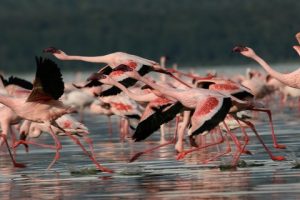
The wet season feels completely different. The landscape turns green. Baby animals appear across the plains. Flamingos gather in huge numbers. The park feels quieter and more personal. Wildlife can be harder to spot, but you experience a softer, more beautiful side of Etosha that many visitors never see. You also spend far less money.
For many travelers, April and May strike the perfect balance. Wildlife viewing remains excellent. Crowds stay manageable. Temperatures are comfortable. May is the month I recommend most often to friends visiting for the first time.
September brings intense heat and outstanding rhino sightings. November welcomes the first rains and nearly empty lodges. December gives you thunderstorms, dramatic skies, and elephants moving through the bush during the holiday season.
Think about what matters most to you. Consider your budget. Look at how many days you have available. Then choose the season that matches your travel style.
I’ve returned to Etosha seven times since my first disappointing December trip. Every season showed me something different. You can have a good safari at any time of year. But you’ll have a truly unforgettable one when you choose the season that fits your goals.
While in Namibia, you can explore other parts of the country. Here’s a guide on other things you can do in Namibia