What to Pack for Safari Without Overpacking
That first safari game drive usually starts before sunrise, when the air is cooler than most travelers expect and your bag choices suddenly matter. If you’re wondering what to pack for safari, the goal is not to bring more. It’s to bring the right layers, the right gear, and a few well-chosen essentials that make long drives, dusty roads, and bush lodges far more comfortable.
Safari packing is different from packing for a beach trip or a city break. You are dressing for shifting temperatures, outdoor time, small aircraft baggage limits in some regions, and a setting where practicality matters more than outfit changes. The sweet spot is simple: pack light, pack smart, and make room for the realities of the bush.
On my first safari, my bag weighed 23 kilograms. I brought three jackets, two cameras, five pairs of shoes. The small plane from Cape Town to the Kruger National Park had a 20kg soft-bag limit. I watched the ranger strap my huge wheeled suitcase to the wing. He wasn’t happy doing that and I felt bad packing some unnecessary items in my suitcase.
The second time, my bag weighed 12 kg. Everything fit in duffel. I had what I needed and nothing more.
Safari lodges don’t have elevators. Vehicles have limited space and you move often. A heavy bag ruins the trip before you see your first elephant.
Here is exactly what to pack without guessing or adding any extra weight.
What to Pack for Safari: Start With the Basics
Most safari travelers do best with soft, lightweight clothing in neutral colors. Think khaki, olive, tan, beige, and muted brown. These tones help you blend into the environment and tend to show dust less than black or navy. Bright colors are not always forbidden, but on game drives and walking safaris, subdued shades are usually the better choice.
Lightweight long-sleeve shirts are one of the smartest things you can bring. They protect your skin from the sun, help with insects in the evenings, and work well for layering on chilly morning drives. Pair them with breathable pants or practical safari trousers rather than jeans, which can feel heavy, hot, and slow to dry.
You will also want a few short-sleeve tops for the warmer part of the day. If your trip includes luxury lodges, you do not need formal wear unless your itinerary specifically says so. Smart casual is enough in most safari camps and lodges. A simple outfit for dinner works well, especially if you are moving between properties and trying to keep your luggage light.
Dress for Temperature Swings, Not Just Heat
One of the biggest safari packing mistakes is assuming Africa equals constant heat. Early mornings in East and Southern Africa can be genuinely cold, especially in open vehicles. By midday, the same day may feel hot and dry. That is why layering matters more than packing bulky items.
A light fleece or warm mid-layer is worth its space in your bag. So is a packable jacket for morning and evening game drives. If you are traveling during the dry season or heading to higher-altitude areas, this becomes even more important. In places like Namibia, South Africa, or Rwanda’s cooler regions, temperatures can drop enough that you will be glad you packed more than a T-shirt.
A scarf or buff can also be surprisingly useful. It helps with dust on rough roads, adds warmth in the early hours, and takes almost no room in your luggage.
The Best Shoes for Safari
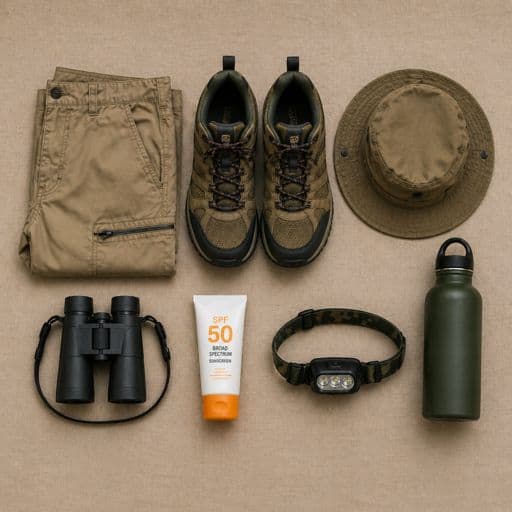
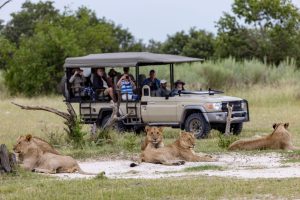
You do not need a different pair of shoes for every activity. For most classic safaris, one comfortable pair of closed-toe walking shoes and one casual pair for camp is enough. Trainers, trail shoes, or lightweight hiking shoes usually work well.
Heavy hiking boots are only necessary if your trip specifically includes longer bush walks, gorilla trekking, or rugged terrain. Otherwise, they can be more shoe than you need. Sandals can be useful around the lodge, but they are not ideal for game drives in buggy areas or for walking on uneven ground after dark.
The Gear That Actually Helps on Safari
The best safari gear earns its place quickly. A good pair of binoculars can completely change your experience, especially when animals are farther from the vehicle or partially hidden in brush. If you enjoy birding or photography, binoculars are even more valuable.
A camera is optional, but if photography matters to you, pack extra memory cards, spare batteries, and a way to protect equipment from dust. Dust is part of the safari experience. It gets into vehicles, bags, and clothing, so packing a simple protective pouch or dry bag is a smart move.
A hat with a brim is more useful than a fashion cap because it protects your face and neck during long hours outside. Sunglasses matter too, especially on dry and bright plains where glare can be intense.
A small daypack is another practical addition. It gives you easy access to your camera, sunscreen, water bottle, and extra layer without forcing you to dig through your main luggage every time the temperature changes.
The Safari Capsule Wardrobe
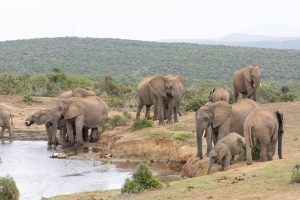
You need five days worth of clothes for a two-week trip. Wash clothes in the sink. Safari camps have laundry service for a small fee.
Here is your full clothing list:
Bottoms (2 pairs)
- One pair of lightweight hiking pants (zip-off legs work fine)
- One pair of shorts
Avoid jeans. They get heavy when wet. They take forever to dry. Dark colors attract tsetse flies – stick to khaki, olive, tan.
Tops (3-4)
- Two short-sleeve shirts (quick-dry fabric)
- One long-sleeve shirt for sun protection
- One lightweight fleece or sweater
Cotton works but dries slowly. Merino wool or polyester blends handle sweat better and resist odors.
Outer layer (1)
- A soft-shell jacket or fleece. Mornings on game drives can drop to 5°C (41°F) in southern Africa. By 10 am, you’ll peel it off.
Underwear and socks
- 4-5 pairs of underwear (merino or synthetic)
- 3-4 pairs of hiking socks (wool blend)
Headwear
- Wide-brimmed hat with chin strap. The sun is brutal. The strap stops your hat from flying off in an open vehicle.
You do not need:
- Camouflage (illegal in many African countries)
- Bright white or neon colors (animals see them, dust shows instantly)
- Heavy denim
- Formal wear
Documents and Money You Should Not Forget
Your passport, visa documents if required, travel insurance details, vaccination records when relevant, and copies of key reservations should stay organized and easy to reach. Some travelers keep digital copies only, but it is still wise to carry printed backups for major trip documents.
Cash needs depend on where you are going. In some safari destinations, card payments are common at lodges, while tips, border crossings, local markets, or smaller purchases may still be easier with cash. Small bills in US dollars are often useful in parts of Africa, but local currency also has its place. Check your destination before departure rather than assuming one approach works everywhere.
Health and Comfort Items Worth Packing
Sunscreen, insect repellent, lip balm, and any prescription medication should be considered core safari essentials. A basic personal medical kit with pain relievers, anti-diarrheal medication, antihistamines, blister care, and motion sickness tablets can save you from small problems becoming trip distractions.
If you are headed to a malaria-risk area, your packing list should include whatever prevention plan your doctor recommends. That may mean prescription medication, stronger repellent, or both. This is one area where destination matters a lot. Safari travel in Botswana, Kenya, Tanzania, South Africa, Uganda, or Zambia does not always come with the same health considerations in every season or region.
Wet wipes and hand sanitizer are also worth packing, especially for long transfer days or remote game drives. Many camps are well-equipped, but having your own basics makes the day easier.
Luggage Matters More Than People Expect
If your safari includes bush flights, baggage limits can be strict, and hard-shell suitcases are often discouraged. In those cases, a soft duffel bag is usually the safest choice. Even when limits are not especially tight, a flexible bag is easier to load into safari vehicles and move through camps.
This is where overpacking becomes a real problem. You may be changing lodges, taking internal flights, or transferring overland. A smaller, manageable bag makes the whole trip smoother. Many safari lodges also offer laundry service, which means you can pack fewer clothes than you think.
What Not to Pack for Safari
A few things are better left at home. Camouflage clothing can be restricted or sensitive in some African countries, so skip it. Bright white clothing gets dirty fast in dusty environments. Expensive jewelry rarely adds anything to the experience and can create unnecessary stress.
You can also leave behind heavy books, multiple large toiletry kits, and too many outfit options. Safari style is practical, relaxed, and repeat-friendly. Nobody is keeping score on how many shirts you packed.
What About Safari in Different Seasons and Regions
Southern Africa (Botswana, South Africa, Namibia) has dry winters (May to September) and hot wet summers (October to April). Winter mornings are cold – near freezing. Pack an extra fleece. Summer is hot and humid – more shorts, fewer long sleeves.
East Africa (Kenya, Tanzania, Uganda) is closer to the equator. Temperatures stay steady year-round. The difference is rain. The long rainy season (March to May) and short rains (November to December) mean mud. Pack a rain jacket and waterproof shoes.
For Uganda or Rwanda gorilla trekking, the rules change. You need waterproof pants, gaiters, and gardening gloves. That’s a separate list. This article is focused on savanna safari only.
A Smart Safari Packing List by Category
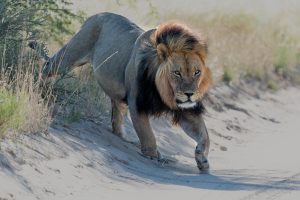
If you like a clear checklist, focus on these categories rather than exact item counts: lightweight neutral clothing, warm layers, closed-toe shoes, sun protection, insect protection, travel documents, medications, camera gear, binoculars, and a soft travel bag. Add swimwear if your lodge has a pool, and a nicer casual outfit if your trip includes upscale camps or city nights before or after the safari.
If your itinerary includes gorilla trekking, cultural visits, beach extensions, or a stop in cities like Cape Town, Nairobi, or Arusha, adjust your packing accordingly. That is the real trick with safari travel. There is no one-size-fits-all list because the right bag for a luxury fly-in safari is not identical to the right bag for an overland trip with multiple climates.
We always come back to the same principle: pack for the experience you are actually having, not the fantasy version of the trip. The bush rewards travelers who stay flexible, travel light, and prepare for changing conditions.
The best safari packing list leaves room for movement, comfort, and the unexpected thrill of being fully present. Pack for early mornings, dusty afternoons, and evenings under open African skies, and you will be ready for far more than great photos.
What can I pack for a Safari?
You do not need two pairs of boots. You do not need a different outfit for each day. You need layers, good binoculars, and the discipline to leave things behind.
My second safari bag weighed 12 kg. I missed nothing. I saw leopards, lions, elephants, and a rhino with her calf. The dust from the Kuger Game Reserve turned my trail runners red and they still look good.
Pack the list above, weigh your bag and take out one more thing. The animals will always be at the Safaris and most important thing is dress comfortably and prepare well for a memorable experience.