Top 11 Things to See When You Visit Egypt (for the First Time)
The Ultimate Egypt Bucket List: 11 Unforgettable Things to See and Do
You will find some of the world’s oldest and most fascinating landmarks in Egypt. For lovers of history and culture, this is an amazing place that you should visit. We consider visiting Egypt a must for everyone. Things to see in Egypt include Pyramids of Giza, Luxor Temple, Valley of the Kings, Karnak Temple and more.
You can imagine the sun warming your skin as you stand before a mountain of stone crafted by human hands thousands of years ago. You can picture yourself drifting down the world’s longest river, past temples that house the stories of gods and pharaohs. You can smell aroma of spices wafting through a bustling market, and hear the call to prayer echo over a timeless landscape.
Egypt is a country that doesn’t just live in history books but invites you to become part of its ongoing story.
With so many incredible sights, how do you even begin to plan your trip? How do you decide which places to visit? You can feel overwhelmed, wondering what’s truly unmissable and what you can skip.
Don’t worry. We’ve put together a list of top places to see. This is a guide to plan your trip to the heart of Ancient Egypt and beyond. We’re diving deep into the top 11 things you absolutely must see in Egypt, to make your journey seamless and profoundly personal.
In this guide, we’ll take you through the ultimate Egypt bucket list of 11 things to see and do.
1. The Pyramids of Giza & The Sphinx: Touch the Face of Eternity
You will be in awe and stunned the first time you stand before the Great Pyramid. This is the reason Egypt is on your bucket list in the first place. No amount of photos or documentaries can prepare you for the moment you lock eyes with the Pyramids of Giza.
It’s one of the ancient wonders still standing, towering over the desert for more than 4,500 years. You need to arrive early to beat the crowds and watch the morning sun bathe the limestone in shades of gold.
This is the only surviving wonder of the Ancient World. Think about that for a second. These colossal structures have stood firm for millennia. The Great Pyramid of Khufu was the tallest structure in the world for nearly 4,000 years. That’s a record that puts every modern skyscraper into perspective.
Things to Note and do
- Go Inside the Great Pyramid: Yes, it’s a tight, humid climb, and the burial chamber is now empty. The experience of navigating the ancient passageways, feeling the weight of the stone above you, and standing in the very space built for a pharaoh’s afterlife is a thrill you’ll never forget. For around $28 extra on your entry ticket (about 1500 EGP), you get access to the King’s Chamber. (Pro-tip: Book the extra ticket in advance, as they limit daily entries).
- See the Pyramids from Every Angle: Don’t just see them from the entrance. Walk around them. Touch the massive limestone blocks. You can hire a camel or a horse for the short journey to the panoramic viewpoint on the nearby dunes. This is where you get that classic, postcard-perfect shot of all three pyramids lined up. Our experience in this visit was awe inspiring. As we walked between the pyramids at dawn the rising sun painted long shadows. The silence, broken only by wind and sand, made the stones feel like they were alive.
- Meet the Sphinx: Gaze into the enigmatic face of the Great Sphinx, with the body of a lion and the head of a pharaoh (believed to be Khafre). The Sphinx was smaller than we imagined, nevertheless its mysterious presence is immense. You will find yourself standing where ancient priests and pharaohs once stood and ponder the same riddle.
2. The Egyptian Museum in Cairo
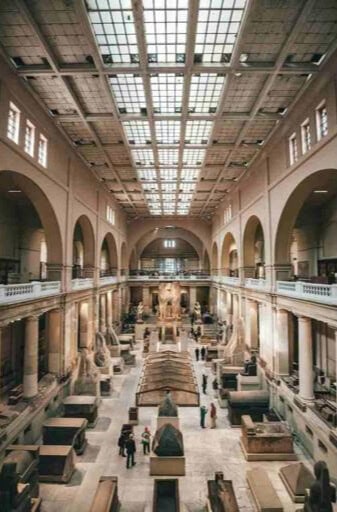
This museum is a treasure chest of antiquities. You will need context before you head south to the great temples. The Egyptian Museum in Cairo is that context. This is a glorious, slightly chaotic treasure chest that holds the keys to understanding everything else you will see.
This is the home of King Tutankhamun’s treasure. All of it. We’re talking his iconic solid gold death mask, his thrones, his chariots, and even his underwear. The sheer volume and preservation of items from a single, relatively minor pharaoh’s tomb will amaze you and set the stage for your visit to the Valley of the Kings.
Things to Note and do:
- Hire a Guide for an Hour: The museum’s layout is old-school, with minimal signage. A knowledgeable Egyptologist guide for even a short time can whisk you to the highlights, explain the significance of the artifacts, and bring the stories to life. The guide really made a difference for us during our visit. They’ll show you the Narmer Palette, which depicts the unification of Upper and Lower Egypt, and the fascinating Royal Mummy Room (This requires an extra ticket).
- Focus on Tutankhamun: The entire second floor is dedicated to the boy king. Give yourself ample time here. Look beyond the mask at the intricate jewelry, the golden shrines, and the everyday objects placed in his tomb for the afterlife.
- A Note on the Grand Egyptian Museum (GEM): You’ve likely heard about the new Grand Egyptian Museum near the Giza plateau. As of late 2024, it is partially open, with a full opening imminent. It promises to be the world’s largest archaeological museum. Check the latest status for your trip—you might be one of the lucky first to experience Tutankhamun’s entire collection displayed in a state-of-the-art, modern setting.
Note about the Grand Egyptian Museum: Still in soft opening but partially accessible (main galleries, central atrium, and Ramses II hall open as of April 25) Entry: from 1270 EGP ($26.65)
Open daily from 9 AM to 6 PM (check the website for updated hours during soft launch)
3. A Nile River Cruise: The Lifeline of Egypt
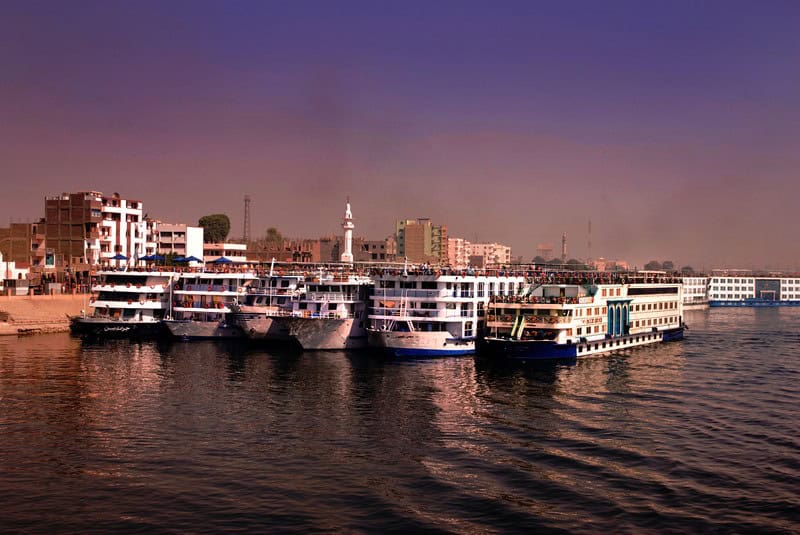
There’s more to Egypt than Cairo alone as it doesn’t tell the full story. The real story unfolds along the Nile River. A multi-day cruise between Luxor and Aswan isn’t just a mode of transport; it’s the centerpiece of the Egyptian experience.
The Nile is the lifeblood of Egypt. For the ancient Egyptians, it was a highway, a source of food, and a divine gift. By sailing its waters, you see the country as they saw it. You’ll watch a timeless tableau of life unfold on the banks: farmers tending their fields, children waving from mud-brick villages, and sunsets that paint the sky in hues of orange and purple.
On our cruise, we watched dawn break over the river while heading toward Edfu Temple. The glow on the water and silhouette of a temple rising ahead made me feel like I was stepping into a living painting
Things to Note and do:
- Choose your Boat & Direction: Cruises typically run from 3 to 7 nights. The most popular route is from Luxor to Aswan (southbound), allowing you to build up to the wonders of Abu Simbel. Choose a 5-star vessel for the best comfort and amenities.
- Embrace the Relaxation: Your days will be spent visiting temples, but the time on the boat is for pure relaxation. Sit on the sundeck with a book, watch the palm trees sway, and take a dip in the pool. This is a welcome respite from the hustle of the cities.
- Enjoy the Onboard Experience: Most cruises offer themed dinners, galabeya (traditional Egyptian robe) parties, and nightly entertainment. It’s a fantastic way to bond with fellow travelers and immerse yourself in the festive atmosphere.
4. The Karnak Temple Complex: Where Giants Walked
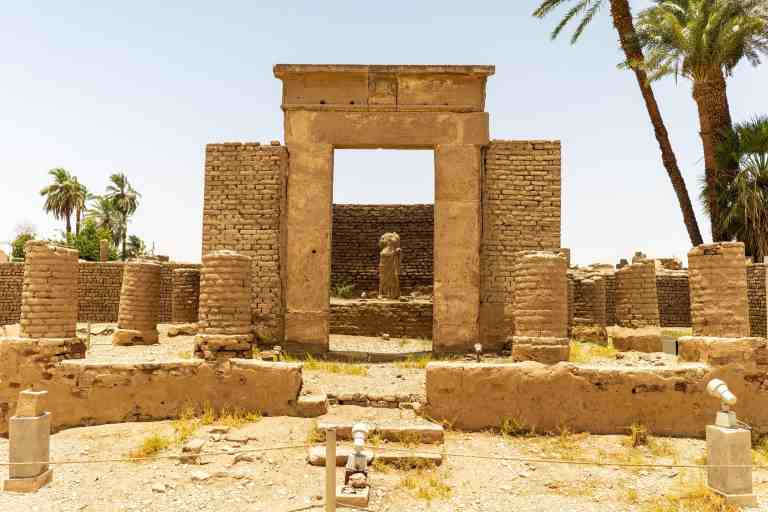
Prepare to have your concept of scale redefined. If you thought the Pyramids were big, wait until you wander into the Karnak Temple Complex in Luxor. This isn’t a single temple; it’s a vast, open-air museum of pylons, obelisks, and columns built over 2,000 years by generation after generation of pharaohs.
Karnak is the largest religious building ever constructed. The numbers are staggering: it covers over 200 acres. The Hypostyle Hall alone contains 134 massive columns, each so wide it would take 10 people linking hands to circle one. This forest of stone is a humbling, awe-inspiring experience. As we walked among the stones, flanked by carvings of pharaohs and gods, we felt like entering a sacred forest of stone.
Things to Note and do:
- Find the Scarab Statue: Located near a sacred lake, there’s a large granite statue of a scarab beetle. Local legend says if you walk around it seven times, it will bring you luck in love. You’ll see plenty of people giving it a try!
- Visit for the Sound & Light Show: While daytime is essential to appreciate the architecture, returning for the Sound and Light Show is highly recommended. As darkness falls, the temple is dramatically lit, and a narrated story of Thebes (ancient Luxor) is projected, bringing the ruins to life in a truly magical way.
- Look for the Details: Don’t just look up. Take time to examine the hieroglyphics and carved reliefs on the walls and columns. Many still hold their original paint, offering a glimpse into how vibrantly colorful these temples once were.
5. The Valley of the Kings: Descend into the Royal Necropolis
Right across the Nile from Karnak lies the Theban Necropolis—the City of the Dead. And its crown jewel is the Valley of the Kings. This barren, sun-scorched valley hides over 60 elaborate tombs, carved deep into the rock to protect the mummies and treasures of the pharaohs for eternity.
This is where you will find the famous tomb of Tutankhamun and the final resting place of powerful rulers like Ramses II and Seti I. The real marvel, however, isn’t the gold (most of it is in Cairo) but the breathtaking art. The walls of these tombs are covered in incredibly well-preserved paintings depicting scenes from the Book of the Dead, designed to guide the pharaohs to the afterlife.
Things to Note and do:
- Ensure your Ticket Includes 3 Tombs: Your standard ticket gives you access to three tombs (Tutankhamun requires a separate, expensive ticket). Do your research beforehand and ask your guide which are the best ones open on that day. Tombs like KV9 (Ramses V & VI) and KV11 (Ramses III) are often praised for their vivid artwork.
- See Tutankhamun: Is It Worth It? His tomb is small and, aside from his mummy, contains only his stone sarcophagus. The real treasure is in Cairo. However, for history buffs, the sheer significance of the site where the greatest archaeological discovery was made can be worth the price.
Respect the Rules: Photography without flash is now permitted in most tombs for a fee (they sell a special camera ticket). However, it is strictly forbidden in a few, like King Tut’s, to preserve the pigments. Always follow the guidelines.
6. Luxor Temple: A Temple Illuminated by Night
- While Karnak feels like a sprawling city of the gods, Luxor Temple, located in the heart of the modern city, feels more intimate and accessible. Its beauty is magnified a thousandfold when the sun goes down.
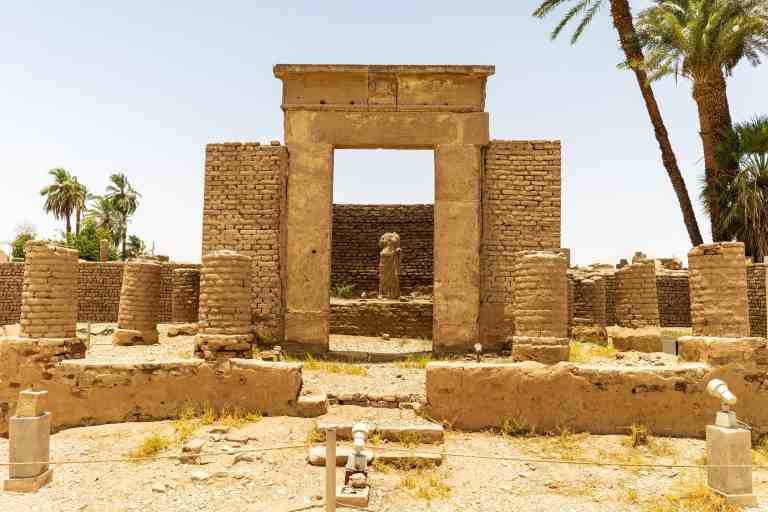
Luxor Temple has a unique, continuous history of use. It was not only a center of worship for the ancient Egyptians but was later converted into a Roman fort, a Christian church, and ultimately, a mosque (the Abu Haggag Mosque, which still sits atop the ruins) was built inside it. This layering of history is palpable.
Things to Note and do: - Visit at Sunset: This is non-negotiable. Plan your visit for late afternoon. You’ll see the temple in the soft, golden light of day, and then watch as the carefully placed spotlights ignite, casting dramatic shadows and making the stone columns and statues glow against the darkening sky. It’s one of the most romantic and photogenic experiences in Egypt.
- Walk the Avenue of Sphinxes: Recent excavations have fully uncovered a 2.7-kilometer avenue of human-headed sphinxes that once connected Luxor Temple directly to Karnak. You can now walk a section of this ancient processional way, literally following in the footsteps of ancient festivals.
7. The Temples of Abu Simbel: A Monument to Power and Perseverance
Travel to the very southern edge of Egypt, and you will be rewarded with one of the most staggering sights on the planet. This is where you’ll find the Great Temple of Ramses II at Abu Simbel. This is not just a temple; it is a statement of absolute power, carved directly into a mountain. We were enthralled at the magnificent site and taken aback at the sheer height of this monument,
The four 65-foot tall colossi of Ramses II guarding the entrance are an unforgettable image. Equally impressive was the story of its relocation in the 1960s. To save it from the rising waters of Lake Nasser created by the Aswan High Dam, an international team cut the entire temple into massive blocks. They then moved it 200 feet up, and reassembled it like a giant Lego set. It’s a testament to both ancient ambition and modern engineering.
Things to Note and do:
- How to Get There: Most people fly from Aswan for a day trip. Alternatively, you can join a convoy that drives through the desert very early in the morning. The flight is quick and efficient, giving you more time at the temples.
- Time Your Visit with the Sun: On two days of the year—around February 22 and October 22—the rising sun aligns perfectly to illuminate the innermost sanctuary, lighting up the statues of Ramses and the gods Ra and Amun. (The statue of the god of the underworld, Ptah, remains in the shadows). While it’s incredibly crowded, it’s a phenomenal spectacle.
Don’t Forget the Small Temple: Right next to the Great Temple is the smaller but equally beautiful Temple of Hathor, dedicated to Ramses’ favorite wife, Queen Nefertari. It’s one of the few times a pharaoh built a monument of this scale for his queen.
8. Aswan: The Jewel of the Nile
After the intensity of Luxor, Aswan feels like a welcome breath of fresh air. The air is drier, the Nile is at its most beautiful, studded with granite rocks and sandy islands, and the pace of life is slower. This Nubian city is a destination in itself.
Aswan offers a different, more relaxed side of Egypt. It’s your gateway to understanding Nubian culture, visiting the stunning Philae Temple, and witnessing another monumental engineering feat: the Aswan High Dam.
Things to Note and do:
- Sail a Felucca at Sunset: This is a must-do. A felucca is a traditional wooden sailing boat that has plied the Nile for centuries. A serene sail around the islands of Aswan as the sun sets is pure magic. It’s cheap, easy to arrange, and one of the most peaceful experiences you’ll have.
- Visit the Philae Temple: Dedicated to the goddess Isis, this temple was also rescued from the rising waters of Lake Nasser. It was moved, block-by-block, to its current location on Agilkia Island. You reach it by a charming boat ride, and its island setting makes it feel uniquely graceful and beautiful.
See the Unfinished Obelisk: Located in a nearby granite quarry, this massive obelisk lies partially attached to the bedrock. A crack discovered during its carving caused it to be abandoned. Seeing it gives you a phenomenal, hands-on understanding of the incredible skill and effort involved in creating the monuments you’ve been admiring.
9. The Siwa Oasis: An Escape to Another World
This is for the brave traveler looking to go beyond the classic itinerary. The Siwa Oasis is your reward. Located in the Western Desert, close to the Libyan border, this remote oasis feels like a different country altogether. It has its own unique and distinct Berber-influenced culture, language, and landscapes.
Siwa is an eerie paradise of salt lakes, freshwater springs, and thousands of palm trees rising from the sand. It’s the place where Alexander the Great journeyed to consult the famous Oracle of Amun, and the ruins of his temple still stand.
Things to Note and do:
- Go Desert Safari: Take a 4×4 trip into the Great Sand Sea. You’ll whiz over massive dunes, swim in a cold spring in the middle of the hot desert, and slide down the musical sands at a place called Fatnas Island.
- Float in Cleopatra’s Bath: A natural spring pool (known as Cleopatra’s Bath or Juba Spring) sits right in the heart of the town. You can relax in its clear, cool waters while locals and visitors gather around to socialize.
- Explore the Shali Fortress: The ruins of this 13th-century mud-brick fortress, built on a hill in the center of Siwa, offer incredible panoramic views of the entire oasis, especially at sunset.
10. Alexandria: The Mediterranean Muse
Founded by Alexander the Great, Alexandria has always been Egypt’s window to the Mediterranean. While its ancient glory as home to the legendary Lighthouse (one of the Seven Wonders) and the Great Library is mostly gone, the city boasts a distinct, cosmopolitan charm.
Alexandria offers a different flavor—a blend of Egyptian energy and Mediterranean languor. It’s a city of poets, scholars, and seafood restaurants overlooking the sea.
Things to Note and do:
- Walk the Corniche: Stroll along the city’s long waterfront promenade. Breathe in the sea air, watch the fishermen, and visit the 15th-century Qaitbay Citadel, built on the site of the ancient Lighthouse.
- Visit the Bibliotheca Alexandrina: This stunning modern library is a rebirth of the ancient Library of Alexandria. Its awe-inspiring, tilting circular design and vast main reading room are worth the trip alone. It’s a powerful symbol of knowledge and rebirth.
- Explore the Catacombs of Kom El Shoqafa: This is a fascinating, spooky Roman-era burial site that shows the unique fusion of Egyptian, Greek, and Roman artistic styles. You descend a circular staircase deep into the ground to discover a multi-level labyrinth of tombs.
11. Dive the Red Sea Riviera
Egypt isn’t just about ancient stones; it’s also home to some of the most spectacular underwater landscapes on Earth. The Red Sea Riviera, including hubs like Hurghada and Sharm El-Sheikh, offers a world-class diving and snorkeling experience.
The Red Sea is a crystal-clear aquarium teeming with life. Its coral reefs are among the healthiest in the world, bursting with colorful fish, sea turtles, dolphins, and even the chance to see sharks. It’s the perfect way to decompress after a long tour of the historical sites.
Things to Note and do:
- You Don’t Have to Be a Diver: Even if you’re not scuba-certified, you can experience this magic. Book a day trip on a glass-bottom boat or simply go snorkeling. The water is so clear and the marine life so abundant that you’ll see incredible things just a few feet below the surface.
- Consider renting a Liveaboard: If you’re a serious diver, the liveaboard boat is the ultimate Red Sea experience. It allows you to travel to remote, pristine reef sites like the Thistlegorm wreck (a legendary World War II shipwreck) and the reefs of the Brothers Islands.
Relax at a Resort: Many travelers use Hurghada as a base, combining a few days of beach resort relaxation with their cultural tour. It’s a fantastic way to end your Egyptian adventure on a tranquil note.
Conclusion
Visiting Egypt for the first time means balancing breadth (the Pyramids, Nile, museums) with depth (local guides, lesser-known tombs, cultural immersion). These 11 gems cover ancient to modern, river to reef, ruin to city life.
You won’t see all of them in a single short trip—but choosing wisely lets you experience both the iconic and the surprising.
Final Tips for First-Time Visitors:
- Visit in October to April when the weather is cooler and comfortable.
- Stay flexible and be prepared to change plans. Sometimes local festivals, weather, or opening changes affect plans.
- Always carry water, snacks, sunscreen, and a light scarf or shawl (for sun or modesty).
- Hire licensed good guides and ask questions—they’ll deepen your experience.
- Leave some buffer days—you’ll want to rest or spontaneously explore beyond planned sites.