14 Top Attractions in Egypt Beyond the Pyramids
You’re going to Egypt for the Pyramids. So what are the top attractions in Egypt beyond the pyramids? This is what most travelers want to know before getting there.
The pyramids are truly an amazing sight. Standing before those ancient giants on the Giza plateau is a moment you never forget. The scale is incomprehensible until you’re there. But here’s the secret every seasoned traveler to Egypt learns: the Pyramids are merely the stunning opening chapter of a much longer and richer story. Egypt has some of the most historical and captivating monuments in the world.
If you only see Giza and then leave, you’re missing the soul of the country. We spent 4 weeks traveling from the Mediterranean coast to the Nubian south, and the memories that stick with us aren’t just of ancient stone, but of the smells, sounds, and sensations in between.
14 Top attractions in Egypt that you must visit
This guide is for the curious traveler. It’s for you, who wants to move beyond the postcard and dive into the real Egypt. These are the top attractions that will show you a country that is exciting and far more diverse than you imagined. There are plenty more attractions to see. These are the ones that stood out to us and extremely memorable.
1. Karnak Temple Complex, Luxor
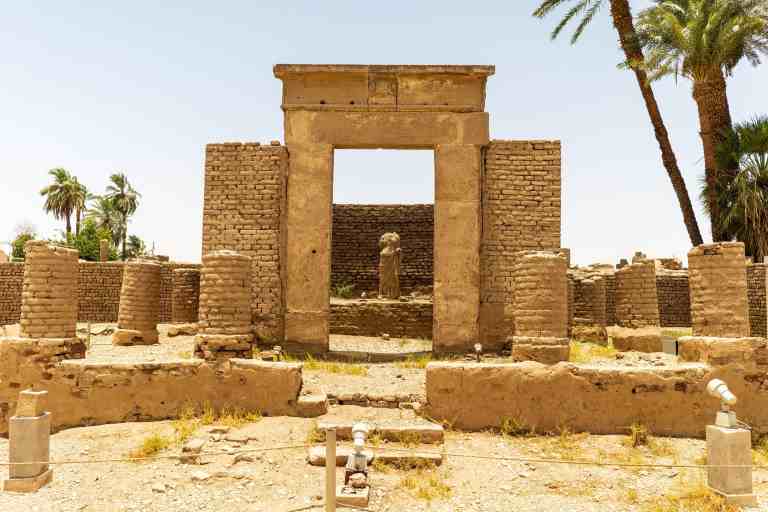
Forget single buildings. Karnak is a city of temples. Walking from the scorching Luxor sun into its first courtyard is impressive. But nothing prepares you for the Great Hypostyle Hall.
Imagine 134 colossal stone columns, each towering 70 feet high. They stand so close together they block the sun. You wander in a forest of carved papyrus and lotus blooms. The scale is deliberately overwhelming. It was designed to make you feel small before the gods and it works.
Practical tips: It’s best to go late afternoon. This way you’ll see as the angled light turns the sandstone to gold.
You should also hire a knowledgeable guide for one hour here. For two of us we paid range approximately $90 for 1hr 30 minutes. It was worth every dollar. The guide will show you hidden details—ancient graffiti, the sacred lake, the towering obelisks. This context transforms rubble into narrative. Karnak isn’t just a site; it’s an experience of sheer, humbling magnitude.
2. Valley of the Kings, Luxor
The Pyramids were the pharaohs’ very public tombs. The Valley of the Kings was their secret, fortified vault. Nestled in the desolate Theban hills, this is where New Kingdom rulers like Tutankhamun and Ramses II hid their riches for the afterlife
You descend steep, cool passageways into beautifully decorated burial chambers. The colors—vibrant blues, yellows, reds—are astonishingly preserved after 3,500 years. The hieroglyphs and scenes from the Book of the Dead are not mere art; they are functional magic spells to guide the king’s soul.
Practical tip: Your ticket includes access to three tombs (Tutankhamun requires a separate, expensive ticket). You have to research which tombs are open on rotation. Highlights include the tomb of Ramses VI (KV9) for its stunning astronomical ceiling, and the tomb of Seti I (KV17), the longest and deepest, though often closed for preservation. Go early to beat the heat and the tour buses.
3. Abu Simbel: The Monument Moved by Man
This 3-hour drive from Aswan through empty desert builds the anticipation. Then you see them: the four 65-foot tall seated colossi of Ramses II, carved directly into a mountain on the west bank of the Nil
The grandeur is impressive. But the modern story is more incredible. In the 1960s, the rising waters of Lake Nasser from the Aswan High Dam threatened to drown Abu Simbel forever. UNESCO led a monumental effort. They cut the entire temple complex into 1,050 blocks, moved it 213 feet up, and reassembled it perfectly. It’s a testament to both ancient ambition and modern preservation
Practical Tip: Time your visit for the Sun Festival (approx. February 22 & October 22). On these dates, the rising sun aligns to illuminate the inner sanctum, lighting up statues of Ramses and the gods. The crowds are massive, but the spectacle is unique.
4. Egyptian Museum, Cairo
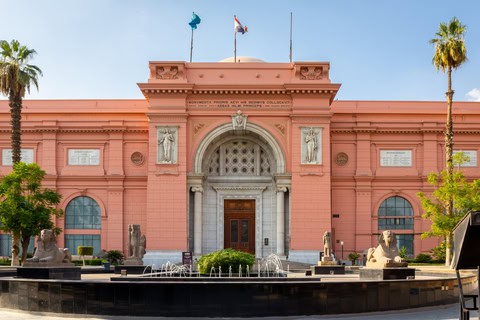
Yes, the new Grand Egyptian Museum (GEM) is opening. But the old pink palace in downtown Cairo holds a chaotic, romantic magic. It feels like an explorer’s attic. Treasures are piled high in glass cases. The air smells of dust and history.
Here, you come face-to-face with the solid gold death mask of Tutankhamun. Its craftsmanship is breathtaking. You can see his tiny sandals, his gaming boards, the daggers buried with him. Upstairs, the Royal Mummies Room (extra ticket) holds the actual preserved bodies of pharaohs like Seti I and Ramses II. It’s an intimate, slightly eerie encounter with history.
Visit this museum before you see the tombs in Luxor. It provides the crucial context. You’ll understand the artifacts you see later in situ. Give yourself at least 3-4 hours. The GEM will be spectacular, but this museum is a living piece of Egyptology’s history.
5. Sail the Nile on a Felucca
Your tour will be full of marble lobbies and air-conditioned coaches. To reset, you need to go on a Felucca. These simple wooden sailing boats have plied the Nile for centuries
We booked an overnight trip from Aswan. For 24 hours, the world slowed to the river’s pace. We swam in the clean, cool current and slept on deck under a blanket of stars you can’t see in cities. The food cooked on a tiny stove on the bank was delicious. There is no engine noise, just the water and the wind in the sail.
Practical tip: Book through a reputable operator in Aswan. A 1- or 2-night trip is perfect. Confirm if meals and sleeping gear (mats, blankets) are included. It’s basic, but it’s the most authentic and peaceful experience you can have on the river. It connects you to the timeless lifeline of Egypt.
6. The White Desert National Park
During this 4-5 hour drive from Cairo, the landscape transforms into an alien world. The White Desert is a vast expanse of surreal, chalk-white rock formations sculpted by wind and sand.
You’ll see mushroom rocks, towering monoliths, and fields of stones that look like giant snowballs. At sunset, the white turns pink, then orange, then deep blue. It’s utterly silent. Spending a night camping here under the stars is a profound, almost spiritual experience.
How to do it: You must go with a licensed 4×4 desert tour operator from Bahariya Oasis. They provide the vehicle, guide, cook, and camping gear. A 2-day, 1-night trip is ideal. The drive is part of the adventure, passing through the contrasting Black Desert and crystal mountain areas.
7. Dive the Red Sea Reefs
On this trip you’ll appreciate that Egypt isn’t just desert and river. The Red Sea coast is a world-class diving and snorkeling destination. The water is crystal clear, warm year-round, and teeming with life.
From the resort town of Hurghada or the backpacker haven of Dahab, you can access vibrant coral gardens. You’ll see parrotfish, angelfish, moray eels, and with luck, dolphins or turtles. The underwater visibility is very clear and can exceed 100 feet.
For the adventurous: The SS Thistlegorm is a legendary WWII wreck. A British cargo ship sunk in 1941, it sits in the Strait of Gubal. You can dive through its holds, still packed with motorcycles, trucks, and airplane parts. It’s an underwater museum and a haunting history lesson in one.
8. Explore Islamic Cairo & Khan el-Khalili Bazaar
Step out of the pharaonic era and into the medieval Islamic world. The district of Islamic Cairo is a maze of narrow alleys, historic mosques, and madrassas (theological schools)
Climb to the roof of the Al-Azhar Mosque for a stunning panorama of minarets and domes. Then, get lost in the Khan el-Khalili bazaar. This isn’t a museum; it’s a living, breathing market. The air is thick with the scent of spices, perfume, and sheesha tobacco. Craftsmen hammer copper in tiny workshops.
Practical tip: Go to observe, not just to buy. Sip mint tea at the famous Fishawi’s Cafe, open 24/7 for over 200 years. Bargain politely if you wish to purchase. A firm “la, shukran” (no, thank you) with a smile works wonders. This area shows you the continuous, vibrant urban heartbeat of Cairo.
9. The Temple of Philae, Aswan
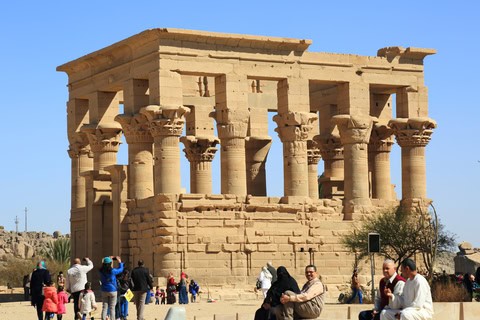
You take a short, beautiful boat ride to reach it. Philae is a temple saved by love. Dedicated to the goddess Isis, it was another victim of the Aswan Dam’s rising waters. The complex was meticulously moved block-by-block to its current island home, Agilkia.
The temple is elegant, with delicate Ptolemaic-era carvings. The cult of Isis, goddess of healing and magic, was one of the last pagan religions to survive in the Roman Empire. There’s a palpable sense of grace and resilience here.
Key insight: Visit in the evening for the sound and light show. It’s admittedly kitschy in parts, but seeing the beautifully lit temples reflected in the dark Nile waters is genuinely magical. It’s a different, more atmospheric experience than a daytime visit.
10. St. Catherine’s Monastery, Sinai Peninsula
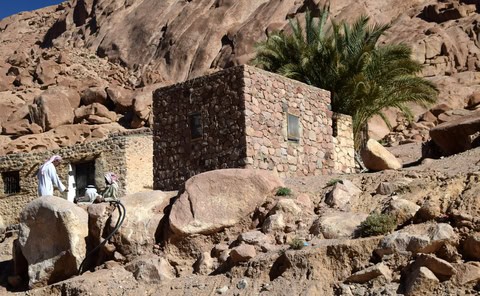
At the foot of what many believe to be Mount Sinai, this fortress-like monastery is one of the oldest continuously working Christian monasteries in the world. Founded in the 6th century AD, it sits in a stark, majestic desert valley.
Inside its walls, you’ll find an incredible collection of ancient icons and manuscripts, second only to the Vatican’s. The highlight is the Chapel of the Burning Bush, behind which a descendant of the original bush is said to grow.
The climb: Many visitors combine this with a pre-dawn hike up Mount Sinai to watch the sunrise. It’s a challenging 2-3 hour climb (or a camel ride partway). The view from the top, where Moses is said to have received the Ten Commandments, is unforgettable, regardless of your faith. It’s a place of powerful history and silence.
11. The Siwa Oasis
This is where you truly escape. Siwa is a remote oasis near the Libyan border, with a unique culture shaped by its Berber (Amazigh) inhabitants. The pace of life is dictated by palm groves and sal
Float effortlessly in the ultra-buoyant Cleopatra’s Bath (a natural spring). Explore the ruins of the Shali Fortress, made from salt and mud-brick. Bike through endless date palm plantations to the stunning Fatnas Island at sunset.
Travel note: Getting there requires effort—a long bus ride from Cairo or Marsa Matruh. That’s what keeps it special. Stay in an eco-lodge. Eat the local food. Listen to the unique Siwi language. This isn’t just a sight; it’s a different world within Egypt.
12. The Temple of Hathor at Dendera
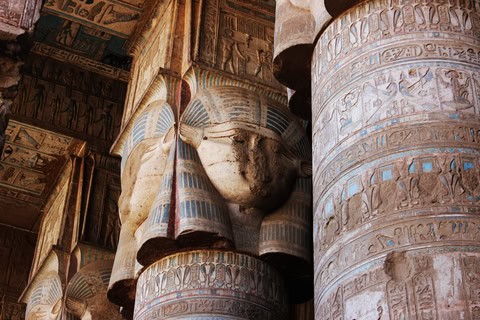
Luxor’s temples are more about power but Dendera is about beauty and cosmic mystery. Dedicated to Hathor, goddess of love, music, and motherhood, the temple is a Ptolemaic and Roman masterpiece with arguably the best-preserved stone ceilings in Egypt.
The colors on the ceilings are vibrant. You’ll see the famous Zodiac relief (a replica; the original is in the Louvre). For us, the real adventure is climbing up a narrow, ancient staircase to the roof. Here, you find small chapels and a breathtaking view. In one chapel, you see a controversial carving some call the “Dendera light bulb,” an enigmatic image that sparks endless speculation.
Why it’s worth it: It’s an easy day trip from Luxor and feels far less crowded. The preservation and the esoteric symbolism make it a favorite for those looking to go deeper into Egyptian mythology.
13. The Colossi of Memnon & Theban Necropolis
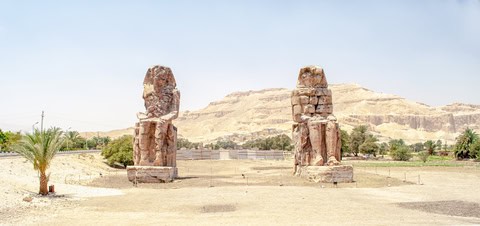
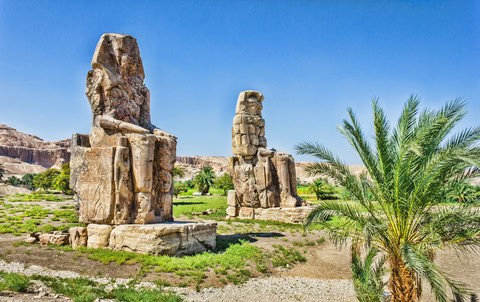
These two 59-foot tall seated statues of Pharaoh Amenhotep III are the lone sentinels of what was once the largest mortuary temple on the west bank. Earthquakes and Nile floods destroyed the rest.
They are impressive for their sheer, lonely size. They offer a vital, free lesson that time is undefeated. Even the greatest constructions return to dust. Visit them at dawn on your way to the Valley of the Kings. They set a powerful, philosophical tone for the day. They remind you that you are walking in a city of the dead, where even giants fall.
14. Dahab: The Red Sea’s Bohemian Escape
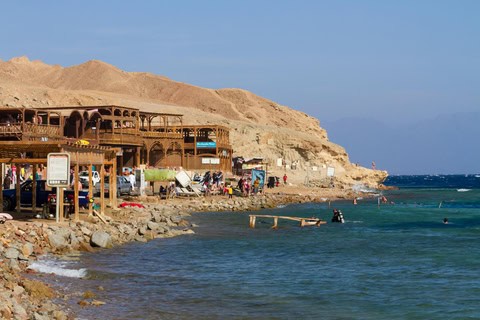
Dahab is a laid-back, bohemian coastal town on Egypt’s Sinai Peninsula. It has a relaxed vibe and budget-friendly travel. This once-Bedouin fishing village on the Gulf of Aqaba is a haven for divers, windsurfers, and digital nomads.
The vibe is all about “dahabsh time” (slow time). You sit on cushions at waterfront cafes. You can walk the main street in sandals. The diving is world-class and affordable. The Blue Hole is a famous (and challenging) dive site, but there are dozens of gentle, shallow reefs perfect for snorkeling right from the shore.
The experience: Come here to unwind after a hectic temple tour. You can take a free diving course, hike in the nearby canyons and eat fresh fish at a seaside restaurant. Dahab provides the perfect, relaxed counterbalance to Egypt’s historical intensity.
Conclusion: There you have it. These are 14 top attractions in Egypt beyond the Pyramids that will leave you in awe of this ancient country.
The Pyramids will amaze you. But Egypt will captivate you with everything that comes after. It’s in the cool silence of a rock-cut tomb, the salty float of a desert spring, the call to prayer echoing over a medieval bazaar, and the kaleidoscope of life on a coral reef.
So, build your itinerary beyond Giza. Sail the Nile. Dive the Red Sea. Sleep in the White Desert. Let Egypt surprise you. The monuments tell the story of gods and kings. But the spaces in between—the people, the landscapes, the rhythm of life—tell the story of Egypt itself. Check out our guide for first time visitors to Egypt.