When to Visit Vietnam by Region and Season
Vietnam can give you misty mountain rice terraces, lantern-lit old towns, dry beach days, and steamy city afternoons – sometimes all in the same trip. That is why the real answer to when to visit Vietnam is not one neat month on the calendar. It depends on where you are going, what kind of weather you tolerate, and whether your trip is built around culture, scenery, beaches, or a little of everything.
For many travelers, the sweet spot is between November and April, when much of the country sees drier and more comfortable conditions. But Vietnam stretches over a long north-to-south axis, and the weather shifts dramatically by region. A great time for Hanoi is not always the best time for Hoi An, and beach conditions in Phu Quoc do not match the mountain climate in Sapa.

When to visit Vietnam depends on the region
Vietnam is easiest to plan when you stop thinking of it as one single-weather destination. The north has four more distinct seasons, with cooler winters and hot, wet summers. Central Vietnam follows a different rainfall pattern, with stormier months later in the year. Southern Vietnam stays warm year-round, shaped more by dry and rainy seasons than by temperature swings.
If you are trying to build one trip that includes Hanoi, Ha Long Bay, Hoi An, and Ho Chi Minh City, March and April are often the most balanced months. You usually get pleasant temperatures in the north, lower rainfall in the center, and dry-season conditions in the south. That said, these months are popular for a reason, so expect higher demand and busier headline destinations.
Best time to visit northern Vietnam
Northern Vietnam includes Hanoi, Ha Long Bay, Ninh Binh, Sapa, and Ha Giang. This region has the biggest seasonal contrast, and that shapes the experience more than many first-time visitors expect.
Spring in the north: March to April
Spring is one of the strongest times to visit northern Vietnam. Hanoi tends to feel comfortable rather than oppressive, and landscapes around Ninh Binh and Ha Long Bay often look lush without the heavy summer downpours. If you want a trip that mixes cities, karst scenery, and light trekking, this is a very good window.
March and April also work well for travelers who want variety. You can wander old quarters, take boat rides through limestone landscapes, and head into hill areas without dealing with the cold winter fog or peak summer heat.
Fall in the north: September to November
Fall is another favorite, especially from late September through November. Temperatures ease off after summer, and skies are often clearer. This is a strong season for Hanoi and Ha Long Bay, and it can also be excellent for mountain routes.
For Sapa and Mu Cang Chai, late September is especially attractive if you want to see rice terraces during harvest season. It is one of those moments when the landscape looks almost unreal, but it is no secret, so plan around crowds.
Winter and summer trade-offs
December through February can be surprisingly cool in the north. Hanoi can feel gray and damp, while Sapa and Ha Giang may get genuinely chilly. If you like moody weather, fewer crowds, and do not mind packing layers, winter can still be rewarding.
May through August brings heat, humidity, and frequent rain. On the plus side, the countryside turns intensely green, and summer storms can make landscapes dramatic. On the downside, trekking can be muddy, cities can feel draining by midday, and visibility in Ha Long Bay is not always ideal.

Best time to visit central Vietnam
Central Vietnam covers places such as Hue, Da Nang, Hoi An, and often the coastal beach stretch that draws both cultural travelers and resort seekers. This is where many itineraries get tripped up, because the central coast does not follow the same weather rhythm as the north and south.
Dry season in central Vietnam: February to August
The best stretch for central Vietnam is generally February through August. During these months, Hoi An’s old town is easier to enjoy on foot, beach days near Da Nang are more reliable, and travel between cultural sites is simpler.
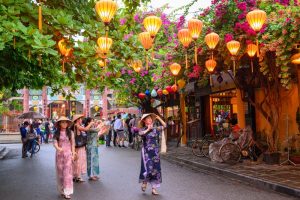
February to April tends to be especially appealing because conditions are warm but not yet at their most intense. This is a strong choice if you want to pair lantern-lit evenings in Hoi An with heritage stops in Hue and some time by the sea.
By June, July, and August, beach weather is often excellent, but the heat can be serious. If your ideal trip includes midday walks through historic districts, those hotter months may feel less comfortable unless you build in slow afternoons and early starts.
Rain and storm season: September to January
Central Vietnam is usually least predictable from September to January, when heavy rain and occasional flooding can affect plans, especially around Hoi An and Hue. October and November are often the riskiest months for weather disruptions.
That does not mean travel becomes impossible. It means flexibility matters. If your focus is culture over beaches, and you are comfortable adjusting day plans, you may still enjoy the region. But if this is your once-in-a-long-time trip and Hoi An is a priority, this is not the season I would choose first.
Best time to visit southern Vietnam
Southern Vietnam includes Ho Chi Minh City, the Mekong Delta, and Phu Quoc. Temperatures stay warm most of the year, so the bigger question is rain rather than cold.
Dry season in the south: November to April
This is the most popular time for southern Vietnam, and with good reason. Ho Chi Minh City is still warm, but rainfall is lower, which makes city exploring easier. The Mekong Delta is easier to navigate without regular downpours interrupting the day, and Phu Quoc usually has its best beach conditions during this period.
December through March is especially comfortable if you want a mix of urban energy, food experiences, floating market excursions, and island time. If you are trying to decide when to visit Vietnam for a broad first-time itinerary, these months make the south very easy to include.
Rainy season in the south: May to October
The rainy season does not mean nonstop rain all day. In many cases, you get heavy but short afternoon showers, with dry stretches in between. Prices can be better, landscapes can look greener, and there are often fewer crowds.
The trade-off is uncertainty. If beach time on Phu Quoc is non-negotiable, rainy-season travel is more of a gamble. If your trip is built more around food, markets, city culture, and flexible movement, the south can still work well.
The best months for different travel styles
If you want one simple answer, March and April are the most reliable all-around months for a multi-region trip. They offer one of the best balances between north, center, and south, which is rare in a country with this much climate variation.
For trekking and mountain scenery in the north, look at March to April or late September to November. For beach time in central Vietnam, think February to August, with spring often more comfortable than peak summer. For southern cities and islands, December to April is the safer bet.
Festival-focused travel adds another layer. Tet, the Vietnamese Lunar New Year, is culturally fascinating, but it also brings closures, price spikes, and heavy domestic travel. If you want to witness a major celebration and do not mind logistical complications, it can be memorable. If smooth transport and open businesses matter more, avoid those dates.
Crowds, prices, and shoulder season value
Peak weather usually brings peak demand. That is most noticeable around December to April, especially in places like Hoi An, Ha Long Bay, and Phu Quoc. Better weather can absolutely justify the cost, but it helps to know what you are trading for it.
Shoulder seasons often give better value. Late April, early May, and parts of September can work well depending on your route. You may catch good conditions, lower prices, and fewer crowds, though you need more tolerance for heat or the chance of rain.
This is often where experienced travelers find the best balance. Perfect weather is nice, but Vietnam is compelling because of its street life, regional food, landscapes, and cultural depth. A little rain does not erase that.
Month by Month Quick Guide
January: North cold and foggy. Central dry and warm. South dry and hot. Best for Phu Quoc or Hoi An.
February: North cool and clear after Tet. Central still dry. South heating up. Good everywhere except far north.
March: North warm and pleasant. Central hot. South very hot. Avoid outdoor activities in Ho Chi Minh City between 11am and 2pm.
April: North hot before rains start. Central dry but getting humid. South sweltering. Good for Halong Bay before crowds build.
May: North wet. Central still dry early month. South wet afternoons. Best for Sapa rice planting season.
June: North very wet. Central hot and dry. South wet. Best for Da Nang beach days.
July: North wettest month. Central dry but humid. South heavy rain. Only go north if you want quiet hotels and cheap prices.
August: North still wet. Central dry but storms possible end of month. South rainy. Good for diving in Nha Trang.
September: North rain eases. Central floods start. South still wet. Avoid central coast entirely.
October: North perfect weather. Central flooded. South easing rain. Best month for Hanoi and Halong Bay.
November: North cool and clear. Central rain ends mid-month. South dry season starts. Good window for everything.
December: North cold and damp. Central damp but not flooded. South perfect. Best for Mekong Delta.
So, when to visit Vietnam?
If this is your first trip and you want the easiest all-round planning window, choose March or April. If your trip is north-heavy, add October and November to the shortlist. If your heart is set on Hoi An and central beaches, aim for February through April. If you care most about Ho Chi Minh City, the Mekong, and Phu Quoc, December to March is hard to beat.
The better question is not just when to visit Vietnam, but what version of Vietnam you want to meet. Go for clear skies if that helps you move with ease. Go in shoulder season if you prefer a little unpredictability and fewer crowds. Either way, plan by region, stay flexible, and leave room for the moments you did not come expecting – those are often the ones that stay with you longest. Vietnam is a great destination regardless of when you visit. Vietnamese people are warm and curious. Many are eager to practice English, especially in cities. In smaller towns, smiles and gestures bridge the gap. Bargaining is normal in markets, but it’s done with humour