How to Choose Rwanda Lodges for Your Safari
A Rwanda itinerary can look compact on a map, yet the choice of where you sleep shapes nearly every hour of the journey. The best Rwanda lodges do far more than provide a room between activities: they determine how early you wake for gorilla trekking, how deeply you connect with local communities, and whether your final days feel restorative or rushed.
For a country known for mountain gorillas, rolling tea country, and remarkably clean, well-managed roads, lodging is part of the experience itself. Rwanda is not a destination where it makes sense to choose purely by star rating. A polished lodge far from your activity may be less useful than a simpler, warmly run stay close to the park gate. Start with your priorities, then let the landscape lead.
Match Your Lodge to Rwanda’s Three Main Experiences
Most first-time travelers build their trip around Volcanoes National Park, Nyungwe Forest National Park, and Lake Kivu. Each region has its own rhythm, weather, and lodging style. Trying to treat them as interchangeable can leave you spending too much of a short trip in the vehicle.
Volcanoes National Park: gorilla trekking and mountain views
The lodges around Musanze and Kinigi are the natural base for gorilla trekking in Volcanoes National Park. Many sit in or near farming communities beneath the Virunga Volcanoes, where volcanic soil supports fields of potatoes, pyrethrum, and vegetables. On a clear morning, the silhouette of the volcanoes can become the backdrop to breakfast.
For trekkers, location matters because gorilla trekking registration begins early. A lodge near Kinigi can reduce the pre-dawn scramble and give you more time to eat, organize rain gear, and arrive composed for the briefing. Properties farther toward Musanze may offer easier access to town, a broader range of prices, and a livelier local setting, but they can add drive time.
Luxury stays in this area often focus on privacy, fireplaces, excellent food, and highly personalized service. Midrange lodges may be simpler but still provide comfortable rooms, attentive staff, and help arranging guides, transfers, and cultural visits. Budget-minded travelers should not assume they must sacrifice hospitality. The key is to confirm hot water reliability, room heating or extra blankets, and the road conditions to the lodge, especially in rainy months.
Nyungwe Forest: chimpanzees, canopy walks, and quiet
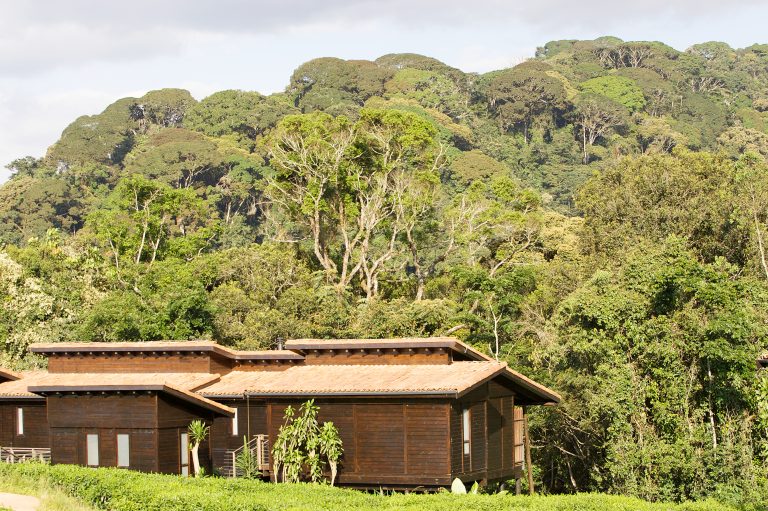
Nyungwe Forest feels different from the volcanic north. It is older, wetter, denser, and built for travelers who want to linger in a forest landscape. Lodges here tend to range from polished tea-estate escapes to practical guesthouses and community-oriented stays near park access points.
If chimpanzee trekking or the canopy walkway is central to your plans, ask exactly how long it takes to reach the relevant briefing point. Nyungwe is large, and a property described as being “near the forest” may still be some distance from your chosen activity. Early departures are common, so a packed breakfast and a dependable driver are practical details, not luxuries.
This is also the region where ambiance can matter most. A lodge overlooking tea fields offers a different kind of Rwanda from one tucked near the forest edge. Choose tea country for open views, slower afternoons, and visits that reveal the human work behind Rwanda’s famous crops. Choose the forest edge if waking to birdsong and maximizing time on trails is the priority.
Lake Kivu: a softer landing after the trek
Lake Kivu is where many Rwanda itineraries exhale. Towns such as Gisenyi, Kibuye, and Cyangugu offer lakeside lodging, boat trips, cycling opportunities, and a chance to slow down after the physical effort and emotion of primate trekking.
Gisenyi is convenient after Volcanoes National Park and suits travelers who want a more social atmosphere, restaurants, and relatively easy connections. Kibuye is often a better fit for couples and travelers looking for a quieter, scenic retreat among green hills and sheltered bays. Near Cyangugu, Lake Kivu can combine naturally with Nyungwe, making it a useful stop on a southbound route.
Do not choose a Lake Kivu lodge by photos alone. Ask whether it has direct lake access, whether swimming is practical from the property, and how close it is to the boat departures or town center you plan to use. A hillside view can be spectacular, but steep paths may not suit every traveler.
What Rwanda Lodges Usually Cost
Rwanda has earned a reputation for high-value, low-volume wildlife tourism, and the pricing around its flagship parks reflects that approach. A gorilla trekking permit is a major part of the overall budget, which makes it tempting to cut accommodation costs sharply. Sometimes that is sensible. But saving a modest amount on a poorly located lodge can make an already significant trek feel more stressful.
At the top end, lodge rates may include private transfers, meals, laundry, drinks, a dedicated host, and carefully planned activities. These properties appeal to honeymooners, multigenerational families, and travelers who want a highly supported safari experience. The real value is often logistical: someone anticipates the muddy boots, the early start, the special meal request, and the shift in plans after a long trek.
Midrange Rwanda lodges are often the sweet spot for independent couples, friends, and solo travelers who want comfort without an all-inclusive safari price. Look for a clear half-board or full-board structure, since dining options near national parks can be limited. Guesthouses and smaller locally owned stays can work well for tighter budgets, particularly around Musanze and Lake Kivu, but check recent feedback on cleanliness, power backup, and transportation support.
Rates also change with season, room type, and how far in advance you book. Rwanda’s drier periods, generally June through September and December through February, are popular for trekking. The wetter months can bring lower accommodation rates and richly green scenery, but trails may be muddier and travel times less predictable.
Questions Worth Asking Before You Book
A good lodge website can make every stay look effortless. A few direct questions help separate a beautiful property from one that truly suits your trip. Ask whether transfers to park briefings are included or can be arranged, what time breakfast is available on trekking days, and whether luggage storage is possible if you are moving between regions.
Also ask about room temperature. Volcanoes National Park sits at altitude, and evenings can be unexpectedly chilly for travelers expecting equatorial heat. In Nyungwe, humidity and rain can make drying trekking clothes difficult. A lodge with a fireplace, heating, laundry, or a practical drying arrangement may improve your experience more than a larger room.
Food deserves attention as well. Rwanda’s park areas are not places to rely on last-minute restaurant choices. Let the lodge know about dietary needs before arrival, particularly if you are vegan, vegetarian, gluten-free, or traveling with children. Most well-run properties can accommodate requests when they have notice.
Choose Stays That Connect You to Place
The most memorable lodges make space for Rwanda beyond the wildlife checklist. That may mean employing local staff in meaningful hospitality roles, sourcing produce from nearby farms, offering visits to community projects with care and context, or introducing guests to music, cooking, coffee, and traditional craft without turning culture into a performance.
This requires judgment. Not every “community experience” is equally thoughtful, and travelers should be wary of encounters that feel rushed, intrusive, or designed mainly for a camera. A responsible lodge or local guide should explain where your visit fees go, how residents participate, and what respectful behavior looks like.
For many travelers, the strongest option is a mixed itinerary: a comfortable lodge near Volcanoes National Park for the logistical intensity of gorilla trekking, a characterful forest or tea-country stay in Nyungwe, then a calmer lakeside property on Lake Kivu. It creates contrast without sacrificing the ease that makes Rwanda such a rewarding place to travel.
Build in Time, Not Just Rooms
It is possible to see Rwanda quickly, but it is better experienced with breathing room. Avoid booking a long cross-country transfer immediately after a gorilla trek if your schedule allows. Treks can be short or demanding, depending on the gorilla family and trail conditions, and the emotional impact often lasts longer than the hike itself.
Give yourself an unhurried afternoon to sit on a terrace, talk with lodge staff, or walk through the surrounding village with a knowledgeable local guide. These quieter hours are where Rwanda becomes more than a sequence of permits and park gates. Choose the lodge that supports that kind of travel, and let each stay become part of the story you came to find.