8 Best Namibia Scenic Drives for a Road Trip
A Namibia road trip has a way of changing your sense of distance. One hour can carry you from rust-red gravel plains to a mountain pass, a dry riverbed, or a foggy Atlantic shoreline. The best Namibia scenic drives are not simply routes between attractions. They are part of the experience, with long horizons, shifting light, and the rare pleasure of feeling genuinely far from the ordinary.
A high-clearance vehicle, sensible pacing, and respect for changing road conditions will make the journey far more rewarding. Many of Namibia’s most beautiful roads are gravel, and the country is much larger than it appears on a map. Build in time to stop, listen, and let the landscape set the rhythm.
1. Spreetshoogte Pass to Solitaire
Spreetshoogte Pass delivers one of Namibia’s great arrival moments. From the high Khomas Highlands, the road drops dramatically toward the Namib Desert, revealing a vast sweep of pale plains, distant mountains, and open sky. It is the kind of view that makes travelers pull over in silence.
The pass is steep, narrow in places, and best approached carefully in daylight. A 4×4 is strongly recommended, especially after rain, and drivers should use low gears rather than relying on brakes during the descent. Once below, continue toward Solitaire, a small but memorable desert stop known for its weathered vehicles, bakery, and sense of isolation.
This drive works beautifully on a route from Windhoek to Sossusvlei. It is less about speed than the transition itself: leaving the central plateau behind and watching the desert take over.
2. Sossusvlei to Swakopmund via Solitaire and the Kuiseb
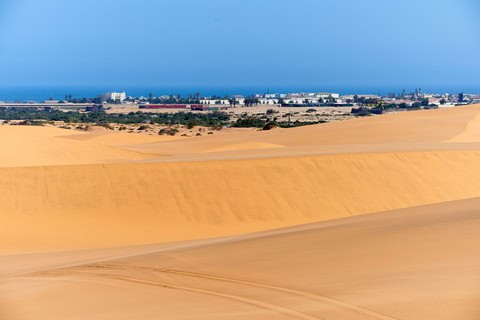
The drive from the Sossusvlei area to Swakopmund is one of the finest ways to understand the scale of the Namib. Leaving the towering dunes behind, the road crosses gravel plains where the landscape appears almost lunar. The terrain changes gradually, from ocher sands and rocky outcrops to the cooler, fog-influenced edge of the coast.
The route commonly follows the C19 and C14 through Solitaire and the Kuiseb Canyon area before reaching Walvis Bay or Swakopmund. The Kuiseb River is usually dry on the surface, but its underground water supports a surprising ribbon of vegetation. Stop at designated viewpoints and look closely at the canyon walls – this is a subtle landscape, but never an empty one.
Plan for a full travel day rather than treating it as a transfer. Fuel up before leaving the Sossusvlei region, carry plenty of drinking water, and expect stretches without services or cell reception. The reward is an unforgettable contrast between desert heat and the cool Atlantic air awaiting at the coast.
3. Swakopmund to Cape Cross on the Skeleton Coast
North of Swakopmund, the C34 runs beside one of Africa’s most haunting coastal landscapes. The Atlantic is often hidden behind mist, the beaches are wide and windswept, and the desert presses right up against the ocean. It is easy to see why this shoreline earned the name Skeleton Coast.
The Cape Cross Seal Reserve is the natural focal point. At certain times of year, tens of thousands of Cape fur seals gather here, creating a noisy, energetic, and distinctly wild spectacle. The smell is powerful, the sound carries on the wind, and the viewing experience is not polished or gentle. That is exactly what makes it memorable.
This is an easy day trip from Swakopmund on a well-traveled road, though coastal fog can reduce visibility. Go slowly, keep headlights on when conditions require it, and never assume a straight road means a risk-free road. If you have extra time, linger at one of the empty beach pull-offs and watch the fog roll across the dunes.
4. The Damaraland Route: Khorixas to Twyfelfontein and Palmwag
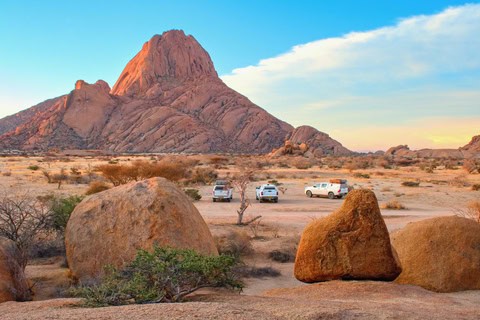
Damaraland is where Namibia’s road trip becomes more elemental. Between Khorixas, Twyfelfontein, and Palmwag, the scenery is carved from volcanic rock, dry valleys, and huge granite formations that glow copper at sunrise and sunset. This is one of the best Namibia scenic drives for travelers who want landscapes, ancient culture, and wildlife in the same journey.
Twyfelfontein is renowned for its ancient rock engravings, created by San hunter-gatherer communities over thousands of years. Visit with a local guide where possible. The site is more meaningful when understood as a cultural landscape, not just a stop for photographs.
As you continue toward Palmwag, watch for desert-adapted wildlife. Elephants, giraffes, springbok, and oryx move through this harsh country, though sightings are never guaranteed. Keep a respectful distance, stay on established roads, and avoid driving off-road in sensitive desert terrain. Damaraland rewards patience, particularly in the late afternoon when the light gives every ridge and boulder greater depth.
5. Etosha National Park: Anderson Gate to Namutoni
Etosha is not a single scenic road but a long, wildlife-rich crossing through one of southern Africa’s great national parks. Entering through Anderson Gate in the south and traveling east toward Namutoni offers a full day of game viewing across open grassland, mopane woodland, and the immense white expanse of the Etosha Pan.
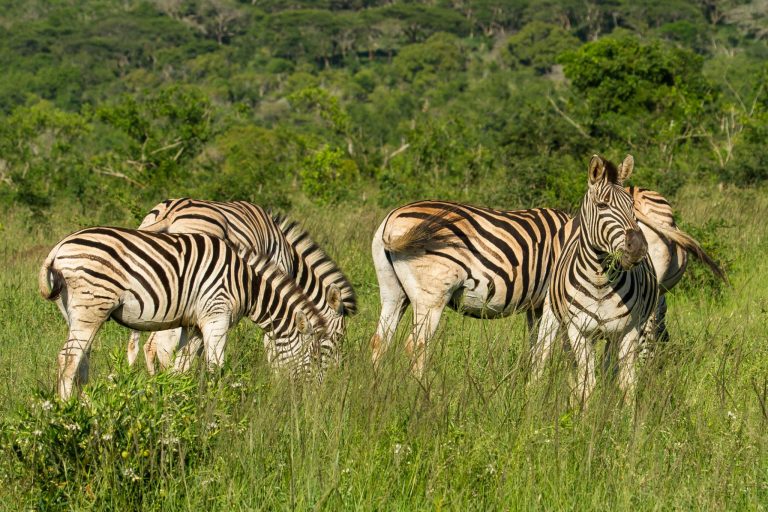
The park’s waterholes turn driving into a slow-moving safari. Elephants, zebras, giraffes, black rhinos, and an array of antelope may appear along the route, depending on the season and conditions. Dry-season travel, generally from May through October, often brings more concentrated wildlife viewing near water sources. Green-season travel can be quieter, more lush, and especially rewarding for birders.
The key trade-off is time. Although the distance may look manageable, wildlife sightings and park speed limits make this a day to travel unhurriedly. Carry water and snacks, refuel before entering, and check gate hours carefully. A sunrise or late-afternoon drive can be exceptional, but never rush to reach a camp before closing time.
6. The Waterberg Plateau Road from Otjiwarongo
For a different side of northern Namibia, take the road from Otjiwarongo toward Waterberg Plateau Park. The approach is visually striking because the flat plains suddenly give way to a long sandstone escarpment rising above the bushveld. After days of desert horizons, Waterberg feels almost improbable.
This route suits travelers who want to break up the journey between Windhoek and Etosha or add hiking and conservation-focused experiences to their itinerary. The plateau area supports wildlife, including rare species that have been relocated here as part of conservation efforts, but the dramatic red cliffs are the main reason to come.
Drive in the late afternoon if your schedule allows. The sandstone catches the sun beautifully, while the surrounding farmland and thornveld take on a warm, golden color. It is a quieter drive than the desert routes, but that is part of its appeal.
7. Fish River Canyon Road to Hobas
Southern Namibia’s Fish River Canyon is vast enough to feel like a geological event rather than a viewpoint. The approach to Hobas, the main access point for canyon overlooks, passes through dry, stony country where quiver trees and low hills punctuate the horizon. It is a remote drive with a powerful destination.
From Keetmanshoop, travelers usually head south and west on a mix of paved and gravel roads toward the canyon area. Check road conditions locally, particularly after unusual rain, and avoid trying to cover this region too quickly. Distances are long, fuel stops are limited, and the landscape deserves more than a hurried overnight.
The canyon is most comfortable to visit in the cooler months, roughly May through September. Summer heat can be extreme, even when the sky looks clear and inviting. Bring more water than you think you will need, plus a spare tire in good condition and basic recovery knowledge for gravel-road travel.
8. Rundu to Divundu Along the Kavango River
The drive east from Rundu to Divundu reveals a Namibia many first-time visitors do not expect. Instead of desert, you will find greener vegetation, village life, tall trees, and glimpses of the Kavango River. This is the gateway to the Zambezi Region and a meaningful contrast to the country’s arid west.
The B8 is generally more straightforward than many gravel routes, but the experience comes from slowing down and recognizing that this is a lived-in landscape. Drive carefully through settlements, watch for pedestrians and livestock, and ask permission before photographing people or homes. Respectful curiosity goes much further than treating roadside communities as scenery.
Divundu makes a rewarding base for river excursions and visits to nearby protected areas. It is also a natural stop for travelers continuing toward the wetlands and wildlife areas of the Zambezi Region.
How to Choose the Right Namibia Scenic Drive
Your ideal route depends on what you want Namibia to reveal. Choose Spreetshoogte and the Sossusvlei-to-coast journey for desert drama. Pick Damaraland for ancient landscapes and a stronger sense of wilderness. Put Etosha first if wildlife is central to your trip, or head east toward the Kavango if river culture and greener scenery appeal more.
For every route, inspect tires daily, keep fuel above the halfway mark when services are sparse, and avoid driving after dark. Wildlife, livestock, poor visibility, and fatigue make night driving a bad bargain. Offline maps are helpful, but local advice from lodge staff, guides, and fuel stations remains invaluable because road conditions can change quickly.
Namibia is at its best when you leave room for the unplanned stop: a herd of oryx beside the road, a roadside craft stall, a sudden bank of coastal fog, or a viewpoint that asks for ten more minutes. Travel deeper, drive with care, and let the road become part of the story you bring home.