Two Week Vietnam Itinerary for Culture and Coast
Hanoi wakes early: steel shutters rise, broth simmers on sidewalk stoves, and motorbikes begin threading through the Old Quarter before the heat settles in. A two week Vietnam itinerary gives you enough time to move from that northern intensity to the slower rhythm of central Vietnam and the energy of the south – without treating the country like a checklist.
Vietnam is long, varied, and more demanding to cross than it looks on a map. The best first-trip route usually runs north to south, combining major cultural centers with a few places where you can pause, eat well, and absorb what is happening around you. This plan favors depth over constant transfers, while leaving room to choose an overnight train, a short domestic flight, or an extra beach day according to your travel style.
A two week Vietnam itinerary at a glance
This route begins in Hanoi and finishes in Ho Chi Minh City. It includes Hanoi, Ha Long Bay or Lan Ha Bay, Hue, Hoi An, Ho Chi Minh City, and the Mekong Delta. It works especially well for first-time visitors who want history, street food, landscapes, and meaningful local encounters in one journey.
Days 1-3: Hanoi – settle into the capital
Give Hanoi three nights if you can. The city rewards unhurried wandering more than a packed sightseeing schedule. Start in the Old Quarter, where narrow streets still reflect the trading guilds that once shaped them. Stop for egg coffee, walk around Hoan Kiem Lake, and let your first meals be simple: bun cha, pho, or a plate of grilled pork with fresh herbs.
On your second day, explore the French Quarter and the Temple of Literature, then spend time around the Imperial Citadel of Thang Long or the Vietnam Museum of Ethnology. The ethnology museum is particularly worthwhile for travelers who want a broader introduction to Vietnam’s many ethnic communities rather than a capital-city-only perspective.
Use your third day for a slower cultural experience. A guided food walk can make Hanoi’s dishes and neighborhood life easier to understand, especially if you are unsure what to order. Water puppet theater is tourist-friendly but still rooted in a northern Vietnamese performance tradition, and makes a lively evening choice.
Traffic in Hanoi can feel overwhelming at first. Cross steadily rather than darting between motorbikes, and remember that sidewalks often function as parking, kitchens, and social spaces as much as pedestrian paths.
Days 4-5: Ha Long Bay or Lan Ha Bay – limestone and water
From Hanoi, travel to the Gulf of Tonkin for a one-night cruise among the limestone karsts. Ha Long Bay is the famous name, but Lan Ha Bay often offers a quieter experience with similarly dramatic scenery. Some itineraries also visit Bai Tu Long Bay, another less crowded option. The right choice depends less on the bay name than on the cruise operator, route, cabin standards, and whether transfers are included.
An overnight cruise typically includes kayaking, a cave visit, meals, and sunrise tai chi on deck. It is a beautiful interlude, but expectations matter. Popular bays are busy, weather can be gray between December and March, and the experience is more curated than remote. Choose a small boat where possible, and ask about its waste practices rather than booking solely on the lowest price.
Return to Hanoi on day five and take an evening flight or overnight train to Hue. Flying saves precious daytime hours. The train is more atmospheric, especially if you book a comfortable sleeper, but delays and basic facilities are part of the trade-off.
Days 6-7: Hue – imperial Vietnam at a gentler pace
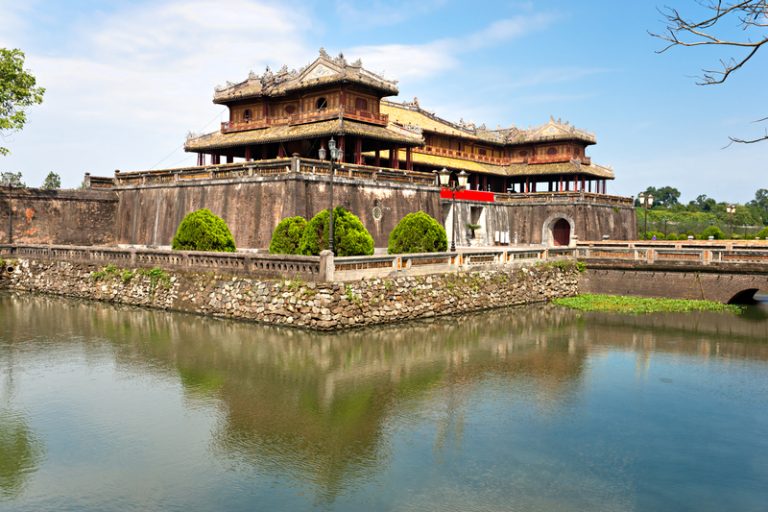
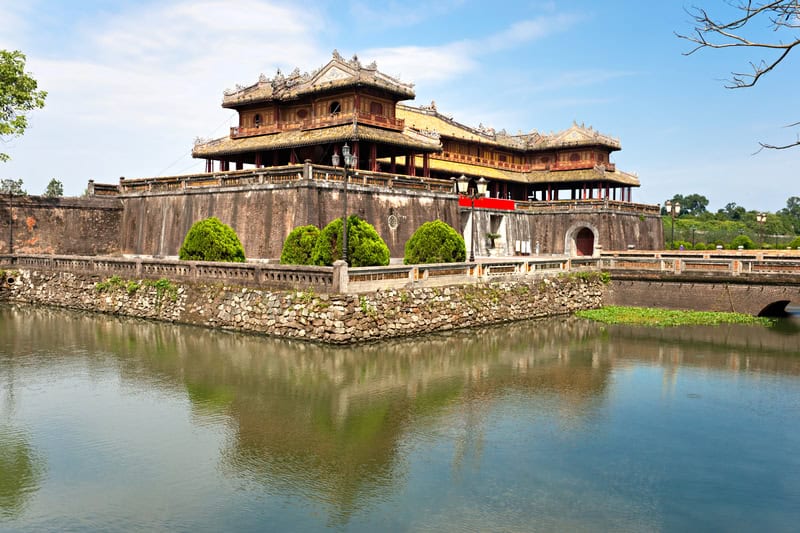
Hue was the seat of the Nguyen emperors, and its atmosphere is markedly calmer than Hanoi’s. Spend your first full day at the Imperial City, allowing time to look beyond the main gates and courtyards. The complex bears the scars of war as well as careful restoration, which gives it a human weight beyond its postcard views.
The next day, visit one or two royal tombs. Tu Duc’s tomb is known for its graceful setting, while Khai Dinh’s is more theatrical, blending Vietnamese design with European influences. A dragon boat ride on the Perfume River can be pleasant, though a private car or bicycle tour often makes it easier to explore at your own pace.
Hue is also one of Vietnam’s great food cities. Try bun bo Hue, a fragrant noodle soup with a deeper, spicier profile than pho, along with small central Vietnamese dishes such as banh beo and banh nam. This is a city where eating locally is part of understanding the place.
Days 8-10: Hoi An – heritage streets, countryside, and coast
Travel from Hue to Hoi An by road, ideally via the Hai Van Pass. The route rises above the coast with wide views of the sea and mountains. A private transfer is the easiest option, while motorbike tours suit confident riders who are comfortable with the safety considerations.
Hoi An’s lantern-lit old town is deservedly popular, but it can become crowded in the evenings. Visit early in the morning, when shopkeepers are opening and the yellow facades are still quiet. Wander the Japanese Covered Bridge area, see one of the old merchant houses, and take time to understand Hoi An’s history as a trading port shaped by Vietnamese, Chinese, Japanese, and European influences.
Stay three nights so Hoi An does not become a rushed photo stop. On one day, cycle through rice fields and vegetable gardens around Cam Thanh or Tra Que. A cooking class that begins at a market can add real context to the ingredients you encounter throughout the trip. On another day, relax at An Bang Beach or take a boat trip to the Cham Islands if sea conditions are favorable.
Hoi An is famous for custom tailoring. It can be a fun souvenir experience, but do not assume every tailor produces the same quality. Bring reference photos, allow time for fittings, and be cautious about ordering a large wardrobe on your first visit. A well-made linen shirt may be more useful than an overambitious suitcase of formalwear.
Days 11-13: Ho Chi Minh City and the Mekong Delta
Fly from Da Nang to Ho Chi Minh City, still widely called Saigon by residents and travelers. The city is fast, warm, entrepreneurial, and layered with stories. Begin in District 1 with the Central Post Office, Notre-Dame Cathedral Basilica area, and the Reunification Palace. The War Remnants Museum is essential but emotionally heavy, so give yourself time afterward rather than scheduling another major museum immediately.
Use your second day to get beyond the central sights. Cholon, the historic Chinatown area, offers temples, markets, and a different view of the city. A food-focused evening in District 3 or District 4 is another strong choice. Look for broken rice, banh xeo, and southern-style coffee, then sit at a low plastic stool and let the city move around you.
On day 13, take a day trip or overnight excursion to the Mekong Delta. Ben Tre is often a better fit than the busiest routes around My Tho for travelers seeking a more relaxed, rural setting. The delta is not untouched wilderness, and tourism is part of many local economies, but visiting with a small local operator can offer a more thoughtful look at river life, fruit orchards, coconut processing, and the pressures climate change places on this region.
Day 14: Leave space for Saigon
Keep your final day flexible. Return to a favorite café, browse a neighborhood market, or book a final meal before your flight. International departures can be busy, so build in more airport time than you think you need.
Practical planning for Vietnam in two weeks
Vietnam’s weather is regional, which is why this route works year-round but never perfectly in every month. March and April are often the easiest months for a north-to-south journey, with relatively dry conditions across much of the country. From September through November, central Vietnam can see heavy rain and storms, while northern winters can be cool and misty. If beach time is your priority, adjust the route around the seasonal forecast rather than forcing a fixed plan.
For longer distances, domestic flights are usually the best use of limited time. Trains are memorable and can be a more scenic, lower-stress alternative, particularly between Hanoi and Hue or Hue and Da Nang. Overnight buses are cheaper, but they may not be the right choice for travelers who value sleep, space, or predictable arrival times.
Carry small cash for markets, street food, and local transport, while using a card for hotels and larger restaurants. Dress modestly at pagodas and temples, remove shoes when requested, and ask before photographing people at work or worship. Learning a few Vietnamese greetings goes a long way, even when English is available in tourism centers.
Vietnam is at its best when you leave a little room between the headline sights. Take the early table at a family-run noodle shop, accept a conversation with your guide about their hometown, or spend an hour watching daily life from a café. The most lasting part of this journey may be the moment you did not schedule.